By Camcer Ordoñez
MISAMIS ORIENTAL – A powerful coalition of national public transport leaders has formally petitioned the Senate to repeal the 28-year-old Oil Deregulation Law, arguing that the policy has failed to protect the public from “skyrocketing” prices fueled by global crises.
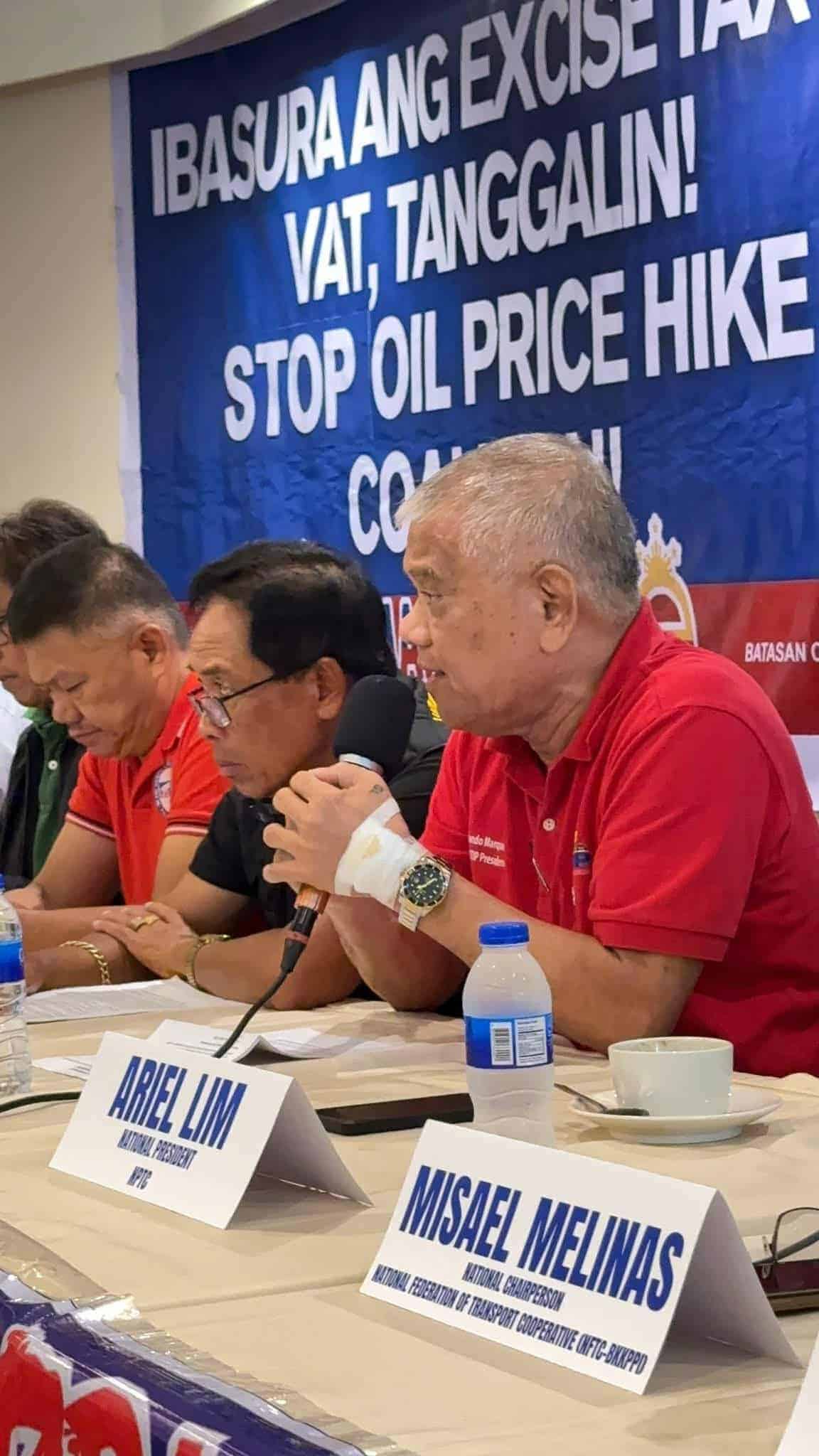
In a position paper addressed to Senate President Vicente “Tito” Sotto III and Finance Committee Chairman Sherwin Gatchalian, the groups—led by the Liga ng Transportasyon at Operators ng Pilipinas (LTOP), headed by Mr. Orlando Marquez, Sr., National President,—called for the immediate revocation of Republic Act No. 8479, or the Downstream Oil Industry Deregulation Act of 1998.
The Business Week National was furnished a copy of the Position Paper, Thursday, March 23, 2026.
The coalition, which includes major organizations such as FEJODAP, Stop and Go Coalition, ACTO, and federations representing buses, taxis, tricycles, and motorcycles, claimed that oil companies are using the Middle East crisis as an “excuse” to hike retail prices uncontrollably.
‘Hands are Tied’
The transport leaders asserted that while R.A. 8479 was designed to ensure a competitive market and fair pricing, it has instead left the government powerless to intervene during economic downturns.
“While the government wanted to intervene and provide relief to the affected public transport industry… its hands are tied up by R.A. 8479,” the position paper stated. The groups argued that oil players have increased prices even when their existing stocks were acquired at lower costs long before the global supply disruptions.
“R.A. 8479 has already outlived its very purpose and objectives for the growth and development of the Philippine economy,” the petition added.
The Return of the OPSF
As a solution, the groups are pushing for the re-establishment of the Oil Price Stabilization Fund (OPSF), a mechanism originally created in 1984.
Under the OPSF system, a buffer fund is managed by the government: oil companies contribute to the fund when global crude prices are low and draw from it when prices surge. This prevents sudden spikes in pump prices that trigger inflation and economic instability.
The OPSF was abolished in 1996 to give way to the current deregulated regime, which allows private oil firms to set prices based on market conditions.
Proposed Fuel Regulatory Board
The petition also seeks the creation of a Fuel Regulatory Board to oversee the implementation of the revived OPSF and ensure its transparency.
The manifesto was signed by high-ranking transport officials, including LTOP National President Orlando Marquez Sr., FEJODAP President Rodelio Sotto, and regional leaders from across the archipelago, representing thousands of drivers and operators from Ilocos to Mindanao.
“In times of crisis, the government must have the tools to protect the people,” the leaders stressed, urging Congress to act swiftly before the transport sector faces total collapse due to prohibitive fuel costs.