The Technical Education and Skills Development Authority (TESDA’s) Regional TVET Innovation Center (RTIC) now rising within the PHIVIDEC Industrial Center in Tagoloan, Misamis Oriental, is set to become one of the most transformative educational and industrial hubs in Region X.
This landmark project, scheduled to be completed before the end of 2026, introduces a forward-thinking approach to technical and vocational education, integrating 21st-century technologies and strategies to equip the workforce with globally competitive skills.
The RTIC, a cornerstone of the Supporting Innovation in the Philippine TVET System (SIPTVETS) initiative funded by the Asian Development Bank (ADB), will rise alongside the existing training center. It is envisioned as a hub of innovation and excellence in technical-vocational education, offering cutting-edge training programs that align with industry demands, upskill the workforce to meet PHIVIDEC’s industrial expansion plans, and provide enterprise-based training for local industries.
The capsule laying and groundbreaking for the RTIC was held on April 11, 2025. The centeris one of 17 RTICs planned nationwide.
TESDA Director General Jose Francisco B. Benitez said the RTIC is part of the agency’s initiative to modernize the technical-vocational education and training (TVET) system in response to increasing technological integration in the workplace.
Expected to be operational by 2026, the RTIC will be equipped with makerspaces, training tools and equipment, and systems for industrial automation and control engineering.
“The decision to offer advanced mechatronics here is part and parcel of the Center’s link to industry players, especially with PHIVIDEC here, so that we can better serve the locators’ needs,” Benitez said
He added that the center’s programs will support agro-industrial productivity and the region’s technical skills education ecosystem.
“What it’s supposed to do is to be part of a much larger ecosystem of all the other TESDA technology institutions, and our partners in the community colleges, the state and municipal universities and colleges, for example, to complete the ecosystem of the TVET education,” he said.
TESDA also plans to develop a cohort of trainers to support and sustain the rollout of mechatronics programs across northern Mindanao.
PHIVIDEC-IA CEO/Administrator Atty. Joseph Donato J. Bernedo reflected on the historic journey of collaboration between PHIVIDEC-IA and TESDA, describing the donation as a culmination of more than four decades of commitment to creating opportunities. He highlighted its perfect timing, aligning with industrial expansion plans for 2025, which will require a highly skilled workforce.
TESDA Regional Director Rafael Y. Abrogar II echoed his sentiment, reiterating TESDA’s commitment to its 8-Point Agenda, particularly in aligning training programs with labor market demands, strengthening industry 7partnerships, and ensuring training translates into employment opportunities. He emphasized that while the signing of the Absolute Deed of Donation is a testament to enduring partnerships, the real challenge now lies in turning this land into a world-class center of excellence. The event also paid tribute to past TESDA leaders and advocates who laid the foundation for this milestone.
The establishment of the P174.24-million RTIC was facilitated by the signing of an Absolute Deed of Donation between the PHIVIDEC Industrial Authority (PHIVIDEC-IA) and TESDA on November 28, 2024. The agreement solidified the transfer of a 29,916-square-meter parcel of land within the PHIVIDEC Industrial Estate in Tagoloan, Misamis Oriental.
While the TESDA Regional Training Center – Tagoloan, established under the National Manpower and Youth Council (NMYC), has long operated in this area under a Conditional Deed of Donation, the Absolute Deed strengthened TESDA’s foothold in the region and cleared the way for further development, including the construction of the RTIC.
TESDA Misamis Oriental Provincial Director Marigold Cherie R. Garrido heralded the Absolute Deed of Donation as a breakthrough that paves the way for realizing the RTIC. She remarked that this center will be a beacon for skill development, resource-sharing, and workforce capability building for generations to come.
This Absolute Deed of Donation not only secures TESDA’s long-term presence in the PHIVIDEC Industrial Estate but also represents a bold step forward in empowering communities, fostering innovation, and meeting the region’s growing demand for a skilled and capable workforce.
The TESDA RTIC (Regional TVET Innovation Center) is part of TESDA’s nationwide initiative to modernize technical education facilities in 16 regions, including Misamis Oriental. With an area of approximately 3,844 square meters, this cutting-edge facility aims to bridge the gap between education and industry by offering a range of resources for applied research, skill development, and industry collaboration.
Its key features include:
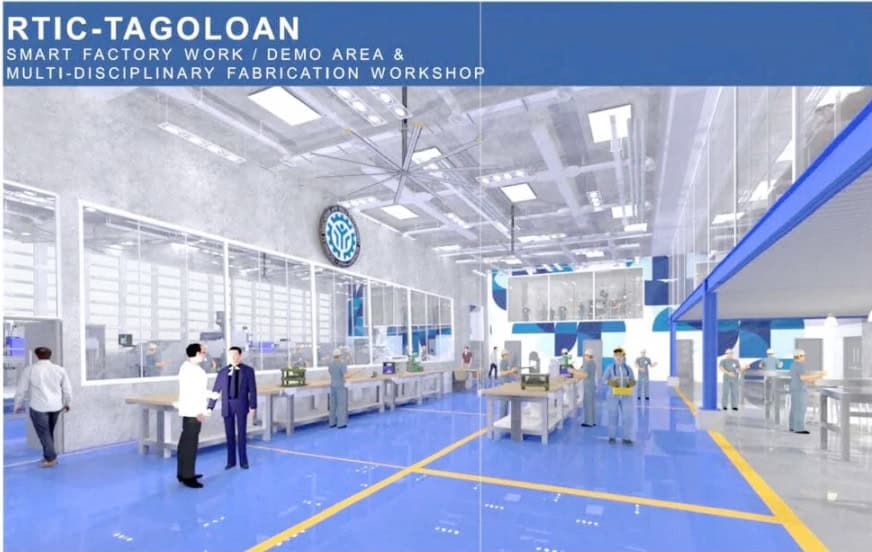
· Smart Factory Demonstration Area equipped with advanced manufacturing tools, IoT devices, and robotics to simulate real-world industrial operations.
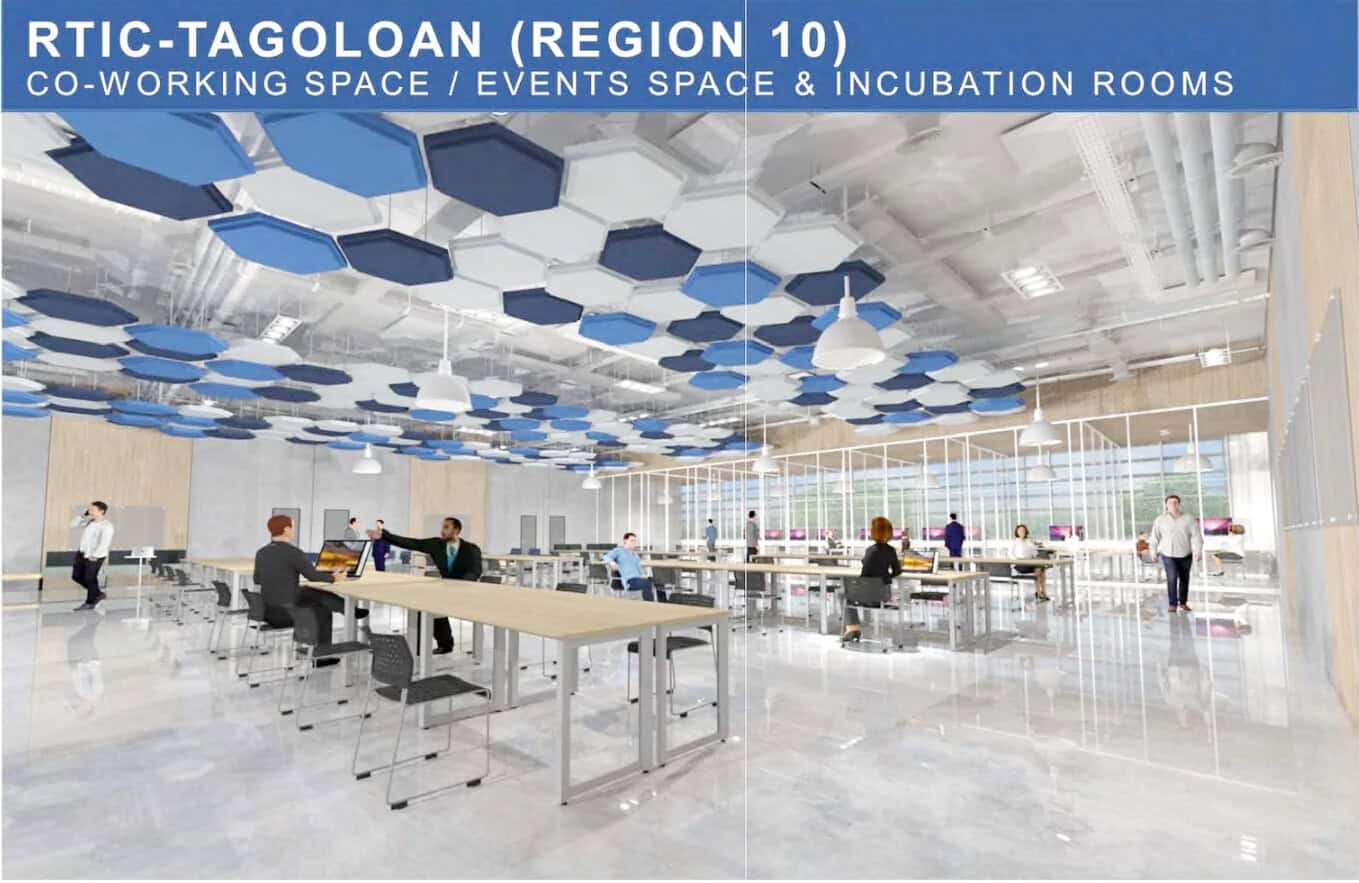
Collaborative workspaces designed to foster innovation and learning at TESDA RTIC Tagoloan.
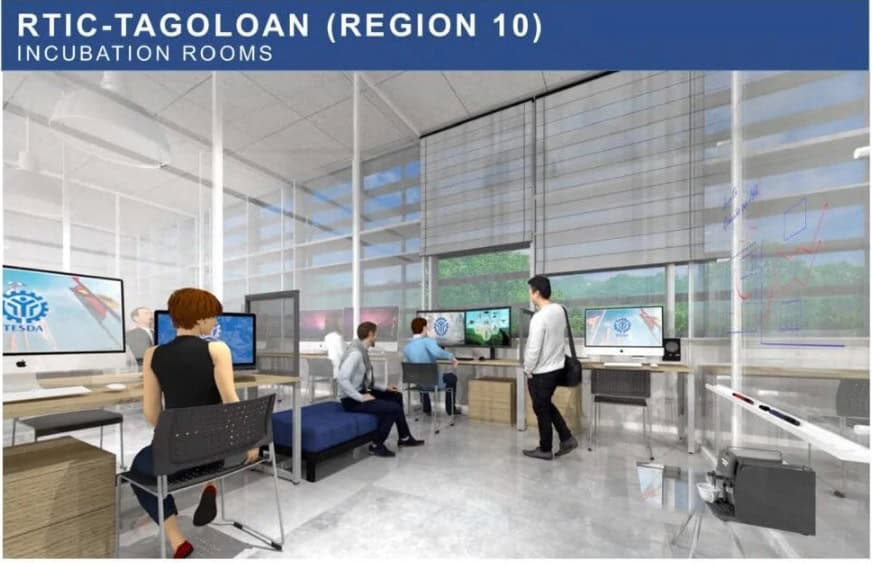
· Applied Research and Innovation Zones to encourage collaboration between students, educators, and industries to foster innovation and address real-world challenges, and state-of-the-art incubation rooms for start-ups and tech-driven collaborations
· Training Facilities for Emerging Technologies whichset a new standard for skill development by offering specialized training in robotics, IoT, automation, and machine vision.
A Closer Look
The RTIC Tagoloan is divided into multiple zones, each with a dedicated purpose aligned with industry needs.
1. Ground Floor Highlights
- Applied Research Showcase Zone (136.65 sqm):
Features kiosks, lounge chairs, and a reception area to display innovations and prototypes. - Smart Factory Demo Area (421.23 sqm):
Houses cutting-edge equipment like 3D printers, laser cutters, and cold chain technologies. - Multi-Disciplinary Fabrication Workshop (281 sqm):
Includes CNC machines, arc welding booths, and advanced fabrication tools.
2. Mezzanine Floor Highlights
- Electronics, IoT, and Robotics Lab (113.67 sqm):
A space for hands-on learning, equipped with Arduino kits, Raspberry Pi modules, and robotics tools. - Processing and Packaging Training Room (87.60 sqm):
Designed for skill-building in industrial processing technologies.
3. Second Floor Highlights
- Co-Working and Incubation Spaces (564.75 sqm):
A collaborative area with modular furniture, glass boards, and high-speed Wi-Fi for start-ups and project teams. - Showcase Café (73.20 sqm):
A vibrant space combining refreshments with interactive displays of local products and ideas.
Environmental and Technical Specifications
1. Sustainability in Design
The RTIC is built with climate-smart designs, including:
- Solar Panels on the Roof Deck: To promote energy efficiency.
- Non-Skid Cement Tiles: Durable and eco-friendly flooring for high-traffic areas.
- LED Lighting and Smart Controls: Designed to minimize energy consumption.
2. Safety and Accessibility
- The facility adheres to BP 344 standards for accessibility, ensuring inclusivity for PWDs.
- State-of-the-art fire exits, exhaust systems and emergency facilities align with national building codes.
3. Cutting-Edge Equipment
The project boasts world-class machinery, such as:
- Industrial-grade CNC milling machines.
- Programmable Logic Controllers (PLCs) for automation training.
- Digital twin software to simulate and optimize factory processes.
Strategic Location
· Tagoloan’s proximity to industrial parks and export zones makes it the ideal site for a Regional TVET Innovation Center. With easy access to the Phividec Industrial Estate, the RTIC can catalyze regional development, enhancing the area’s reputation as a hub for manufacturing and technology.
Economic and social Benefits
The RTIC will act as a bridge between TESDA graduates and industries, addressing the regional demand for skilled labor in manufacturing, automation, and advanced technology. Local businesses will benefit from a well-trained workforce and innovative solutions developed within the RTIC.
Education and Training Advantages
- 1. The RTIC introduces hands-on training programs that directly correlate with industry standards, giving students a competitive edge in the global job market.
- 2. Its focus on research and development ensures that students and entrepreneurs have access to resources for innovation.
Benefits to the Community
The RTIC isn’t just for students—it’s a resource for the entire community. Local businesses, government units, and non-profit organizations can collaborate with TESDA to develop programs that address specific regional needs, from agriculture to IT.
The center’s incubation facilities and co-working spaces also encourage entrepreneurship, allowing individuals to turn ideas into viable business ventures.
Upcoming Opportunities
The RTIC Tagoloan is set to open doors for a variety of stakeholders:
- Students: Advanced training in robotics, IoT, and machine automation.
- Entrepreneurs: Access to incubation spaces and research facilities.
- Industries: Collaboration opportunities for skill development and applied research.
Vision
The TESDA RTIC in Tagoloan is not just a facility; it’s a transformative initiative that will redefine the education and industrial landscape in Misamis Oriental. Its state-of-the-art design, forward-thinking programs, and strategic location make it a beacon of progress for Cagayan de Oro and the entire region.