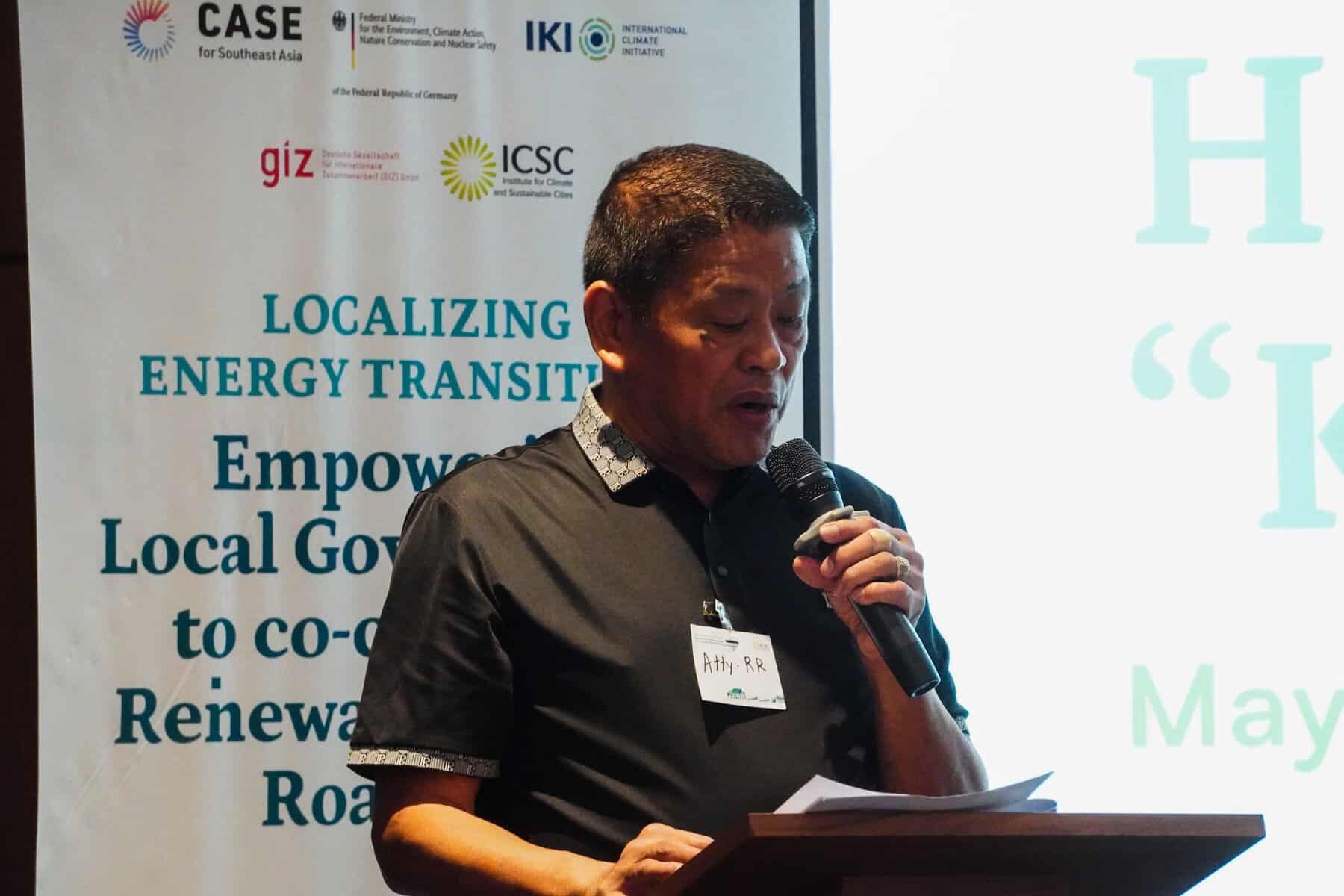
TO strengthen the implementation of the 2024 Draft Local Energy Plan through Integrated Resource Planning (IRP) of the city, Cagayan de Oro participated in the Renewable Energy Roadmap Workshop held on Tuesday in the city.
On behalf of the Office of the City Mayor Rolando “Klarex” Uy, Atty. Roy Hilario Raagas delivered the opening remarks where he reaffirmed the city’s commitment in shaping its energy future.
“Today’s and the next two days’ gathering is more than a technical workshop—it is a call to action. This Renewable Energy Roadmap Workshop is crucial in refining our local energy plan and translating it into concrete, implementation-strategies,” Raagas said.
This included assessing the city’s current energy system, such as demand, supply, infrastructure, and energy-related challenges.
It also aimed to identify and select appropriate energy options and priority interventions based on feasibility, cost, and impact.
At the same time, a clear implementation roadmap will be developed, including financing, institutional roles, and monitoring mechanisms.
The workshop was conducted through a combination of lectures, policy briefings, case sharing, peer learning, group exercises, and hands-on technical support during the sessions.
It also convened the Technical Working Group (TWG) for the Renewable Energy Plan and Roadmap of the Cagayan de Oro LGU, which will lead the city’s energy transition.
This is aimed at localizing the energy transition and strengthening the participation of the local government in developing the roadmap.
As part of the #LocalizingEnergyTransition capacity-building series, the three-day workshop is designed to support the local government of Cagayan de Oro City in validating and refining their Local Energy Plan. Today’s agenda focuses on understanding the current energy landscape featuring a presentation from Department of Energy Philippines Undersecretary Mylene Capongcol on Philippine Energy Targets and the Role of Local Governments in the Renewable Energy Transition.
This activity is supported by the CASE – Clean, Affordable and Secure Energy for Southeast Asia Project and the Tara Climate Foundation and conducted in partnership with AktivAsia Pilipinas. (MDS-CIO/Photo by: ICSC)