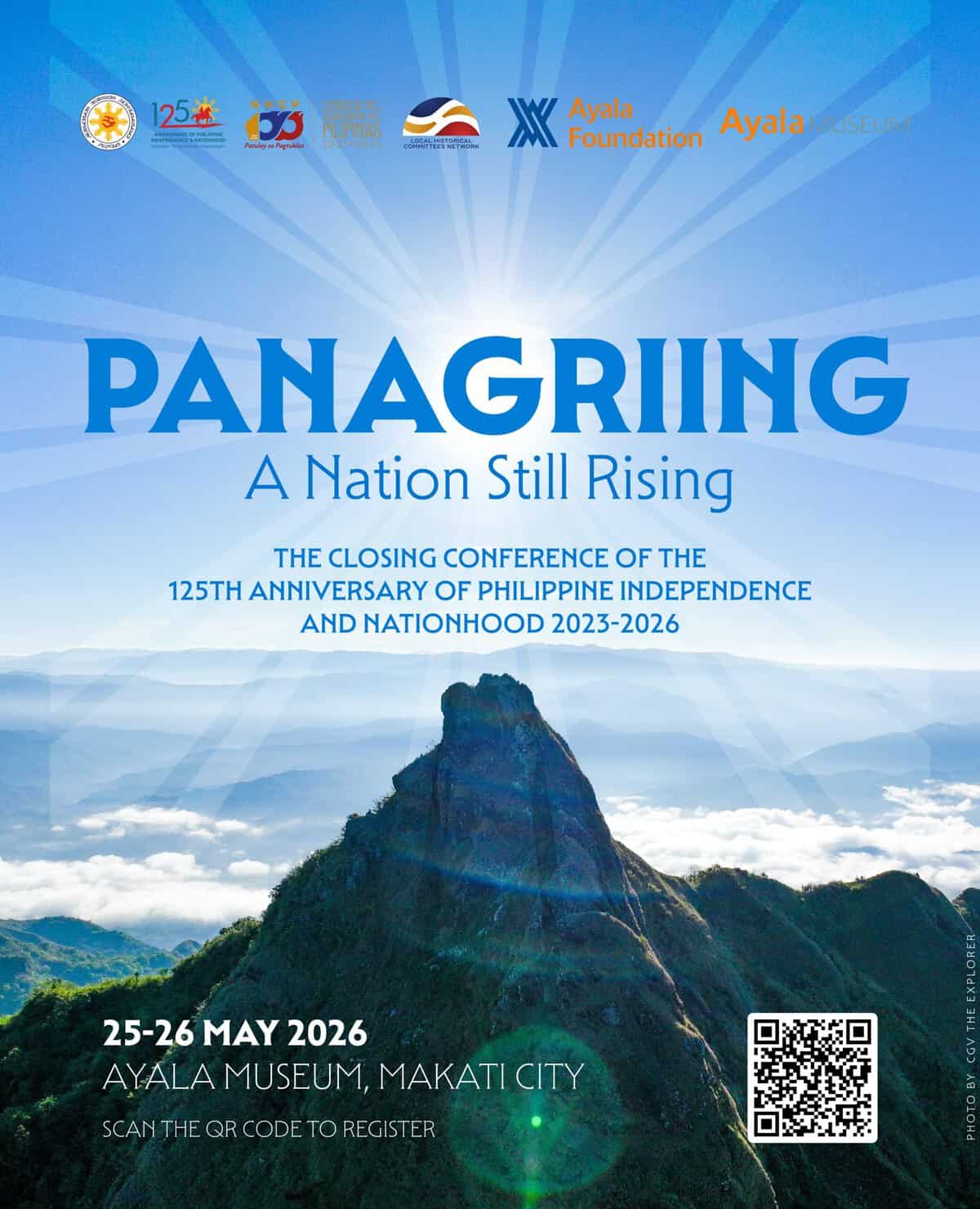
Panagriing: A Nation Still Rising
By Mike Baños
MAKATI CITY- The National Historical Commission of the Philippines paid a fitting tribute to the proclamation of the country’s independence with a two-day academic conference held 25 May 2026 at the Ayala Museum, Makati City.
The Three-Year Milestone Commemoration began in 2023, as the Philippines marked the 125th Anniversary of the Proclamation of Philippine Independence on 12 June 1898 at the house Of Emilio Aguinaldo in Kawit, Cavite.
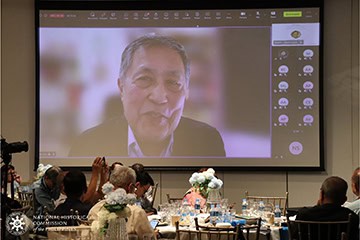
Reynaldo C. Ileto, Ph.D., Honorary Professor, School of Culture, History and Language, The Australian National University
“That Historic Moment Stands as a defining declaration before the world that the Filipino People had emerged as a Nation with its own Aspirations, Identity, and Right to Self-Determination,” noted NHCP Chair Regalado Trota Jose, Jr. during the opening program of Panagriing: A Nation Still Rising – the closing conference of the 125th Anniversary of Philippine Independence and Nationhood 2023-2026 in his message read by NHCP Deputy Executive Director Alvin Alcid.
“We have called this conference Panagriing, an Ilocano word which means “to be roused from sleep.” This is the essence of our commemoration. For when the Filipino comes to fully realize the meaning and depth of His/Her freedom as understood through history, she/he is awakened from ako to a higher consciousness of tayo. It is an awakening that stirs us to unite, to dream beyond the present, to dare what has been untried, to uphold Freedom as a precious gift, and to defend it with our entire being.”
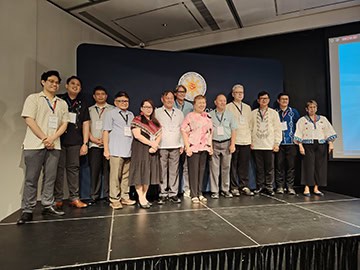
Speakers of PANAGRIING, A Nation Still Rising, The Closing Conference of the 125th Anniversary of Phil Independence & Nationhood 2023-2026 at the Ayala Museum, Makati City.
Jose framed the commemoration as a continuing intellectual and public history project that seeded reflections on our first experiment in self-governance—historically the first Constitutional Republic in Asia, revisiting the establishment of a representative congress that brought together delegates from all corners of the archipelago and formulated a national political community and the Malolos constitution, which enshrined a Bill of Rights, established a truly Filipino government, affirmed the separation of church and state, established an army, and its own territory.
“It remains one of the most important expressions of early Filipino constitutional thought and political modernity,” Jose stressed.
When the young republic was subsequently tested by an emerging global superpower in the Philippine-American War, patriots from all over the islands rose to the challenge, exhibiting a national commitment to freedom, even under great disparity and sacrifice.
As part of this national commemoration, the NHCP unveiled several historical markers under the Landas ng Pagkabansang Pilipino marque which identified and marked key sites across Luzon that witnessed the formation, development, and final phases of the First Philippine Republic.
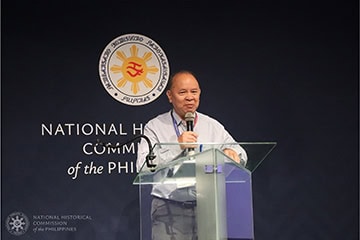
Ricardo T. Jose Ph.D.
The agency similarly brought history to communities throughout the nation through the Republika Community Lectures, held in various localities in Luzon and the Visayas, with historians directly engaging with local audiences in locales where the Revolution and the First Republic were actually lived and experienced.
Jose remarked how fitting the conference served as the culmination of National Heritage Month, reflecting a broad and integrated exploration of Filipino nationhood, exploring the country in all its regions, underscored by the multiple and diverse expressions of the struggle for independence throughout the archipelago.
The second day tackled the nascent nation’s efforts toward self-organization and recognition through diplomacy, the internal politics of the republic, and the bitter resistance after Aguinaldo’s capture. It will concluded with an examination of contemporary commemorative efforts, where museums, libraries, and cultural practices play a vital role in shaping understandings of Filipino Nationhood.
Among the eminent historians who graced the two day conference as keynote speakers on various topics were Maria Serena I. Diokno, Ph.D., Professor Emeritus, Department of History, University of the Philippines-Diliman (The Paradox of Our Struggles for Independence); Reynaldo C. Ileto, Ph.D., Honorary Professor, School of Culture, History and Language, The Australian National University, who was streamed live from Canberra, Australia (Santa Iglesia or Asemblea Filipina? Two Paths to Nation-making and their Significance for the Present); and Ricardo T. Jose, Ph.D., Professor Emeritus, Department of History, UP-Diliman. (Philippine Diplomacy and Diplomats and Their Role in Making the Philippine Nation, 18997 onwards)
“As we close today’s conference, and end too the past three years of celebration and remembrance, we invite you, fellow students of history, fellow cultural workers, educators, and lovers of our nation to use this moment to reflect – in the past that was shared with us, in the present that we inhabit, and in the future that we face,” NHCP Executive Director Carminda R. Arevalo in her remarks formally closing the two-day conference and three-year commemoration.
“For just as our ancestors took the helm of their present with the vision of guiding our nation towards a better future, so remains the unending journey to be better, as a person, as a community, as a people, and as a nation.”
She walked everyone through the last two days, witnessing the story of our first years as a new nation, born in the circumstances of war to a people that had yet to see themselves as compatriots not only in a fight for freedom, but also in a destiny and a future.
“We saw the paradoxes that defined our struggle for independence, the contradictions that limited our forebears, and the realities that cut short the life of our young republic,” she noted.
“But at the same instance, we felt the raw courage of our fellow Filipinos who had fought off a colonial oppressor once and were again rising up to fight another – of the young men and women whotook upboththe instruments of combat and of education to define the meaning of our nation; of the multitude of Filipino communities, in Luzon, Visayas, and Mindanao, and even abroad, whose work to resist became the foundations of an identity that would later bear fruit some almost fifty years later. An identity that would be born from the ashes of another, more devastating conflict.”
Arevalo concluded with a quote from Apolinario Mabini: “Only he is truly a patriot who, whatever his post, high or low, tries to do the greatest possible good to his Countrymen.”
May we all be true patriots in our own Ways.
Similarly, Jose expressed