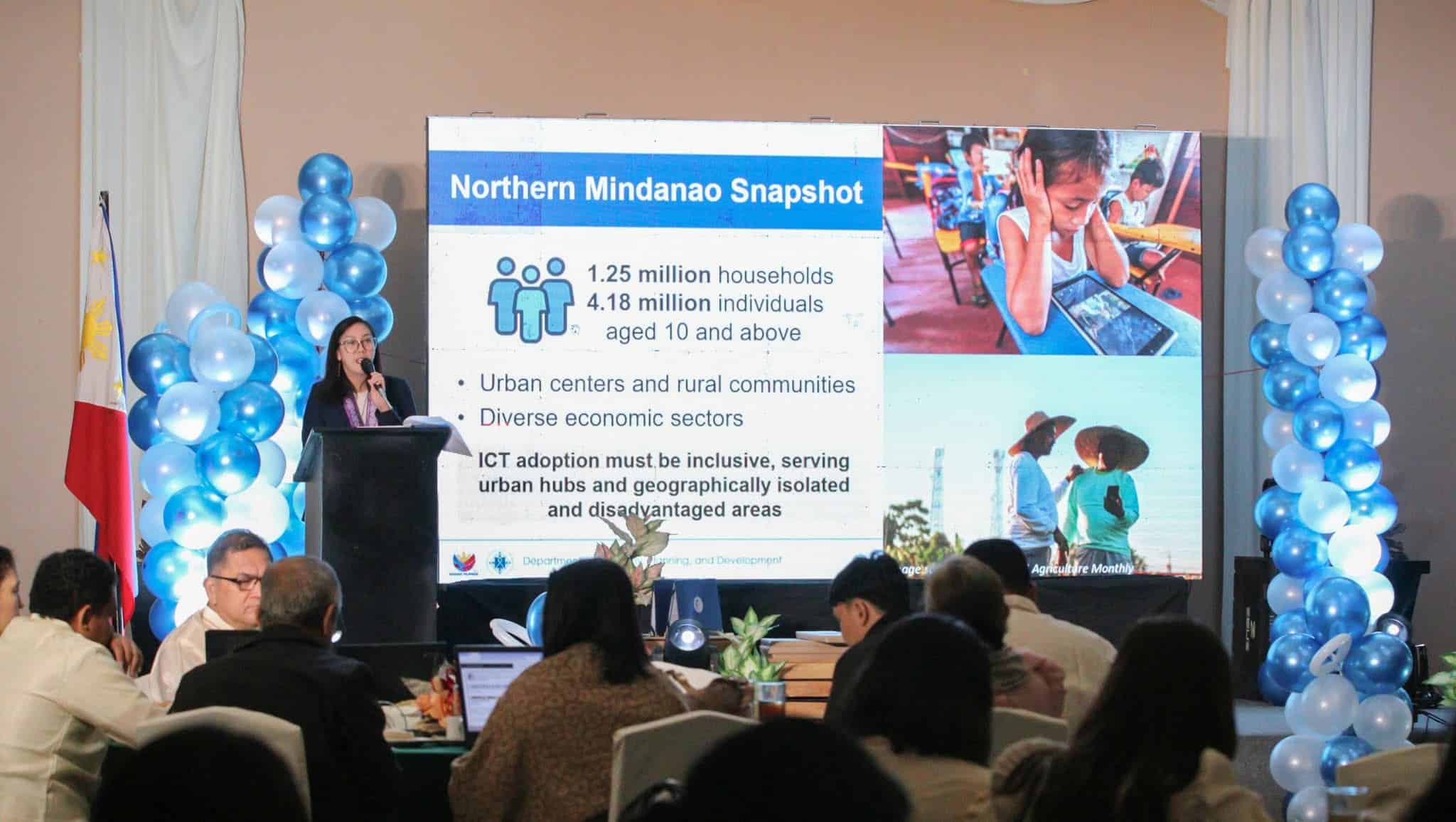
THE Philippine Statistics Authority-10 held the 2024 National Information and Communications Technology Household Survey (NICTHS) Regional Data Dissemination Forum in Cagayan de Oro.
The survey serves as the country’s main source of ICT-related data at the household and individual levels.
The information gathered plays a crucial role in tracking progress on the Sustainable Development Goals (SDGs), the Philippine Development Plan (PDP), DICT initiatives, and international indices.
PSA-10 Chief Statistical Specialist of Sarah Balagbis emphasized that the 2024 National ICT Household Survey provides critical insights into how households in Northern Mindanao access and use ICT.
According to her, the collected data reflect the digital challenges faced by individuals and will serve as a valuable resource for crafting policies, monitoring development programs, and contributing to both local and international ICT benchmarks and development goals.
In a video message, National Statistician of Usec. Claire Dennis S. Mapa highlighted how the 2024 National ICT Household Survey results reveal the real digital experiences of Filipino families, students, and workers.
He underscored that the findings expose both challenges and opportunities in the country’s digital landscape.
Mapa emphasized that the data, developed through careful planning and analysis, are vital for shaping policies aligned with the Philippine Development Plan, the Sustainable Development Goals, and DICT’s Digitalization Plan.
DICT-10 Regional Director Sittie Rahma Alawi reflected on the progress made since the 2019 National ICT Household Survey, noting improvements in connectivity and digital tool usage.
However, she pointed out that many gaps persist, particularly in rural areas.
She emphasized that the new data tell a compelling story of both achievement and ongoing need, and stressed the importance of not being complacent.
Alawi advocated for using ICT data to guide inclusive policymaking and innovation, ensuring that even the most remote communities benefit from digital transformation.
PSA-10 Regional Director Janith C. Aves reported on regional awareness and usage of government websites and services.
She stated that 55.4% of people in Northern Mindanao were unaware of these digital platforms, while only 18.6% of those who were aware used them.
She noted that although this is an improvement of 8.7 percentage points from 2019, the figures still indicate significant gaps in digital access and engagement.
DEPDev-10 Senior Economic Development Specialist April Ann Tigulo discussed the underutilization of online government services, highlighting that fewer than one in five people use them despite their potential to improve government efficiency.
She stressed the importance of the E-Governance Act and recommended simplifying portals, using local languages, and building public trust through secure services.
Tigulo suggested that Region 10 could lead efforts in piloting accessible and user-friendly digital government platforms.
Engr. James Kevin Sagocsoc of DICT-10 underscored the survey’s importance in policy formulation and program development.
He stated that the data will improve decision-making within DICT, help align strategies with actual needs, and foster greater public trust in the government.
He also emphasized that the results are critical for both international benchmarking and the planning of national and regional development initiatives.
Senior Statistical Specialist Christine Gallopin emphasized the importance of using the PSA dissemination forum to translate statistics into concrete actions.
She encouraged continued collaboration across sectors and regions to turn the survey’s findings into inclusive policies and programs that address digital inequalities and support a more connected future. PIA
PSA releases 2024 ICT household survey results for Region 10