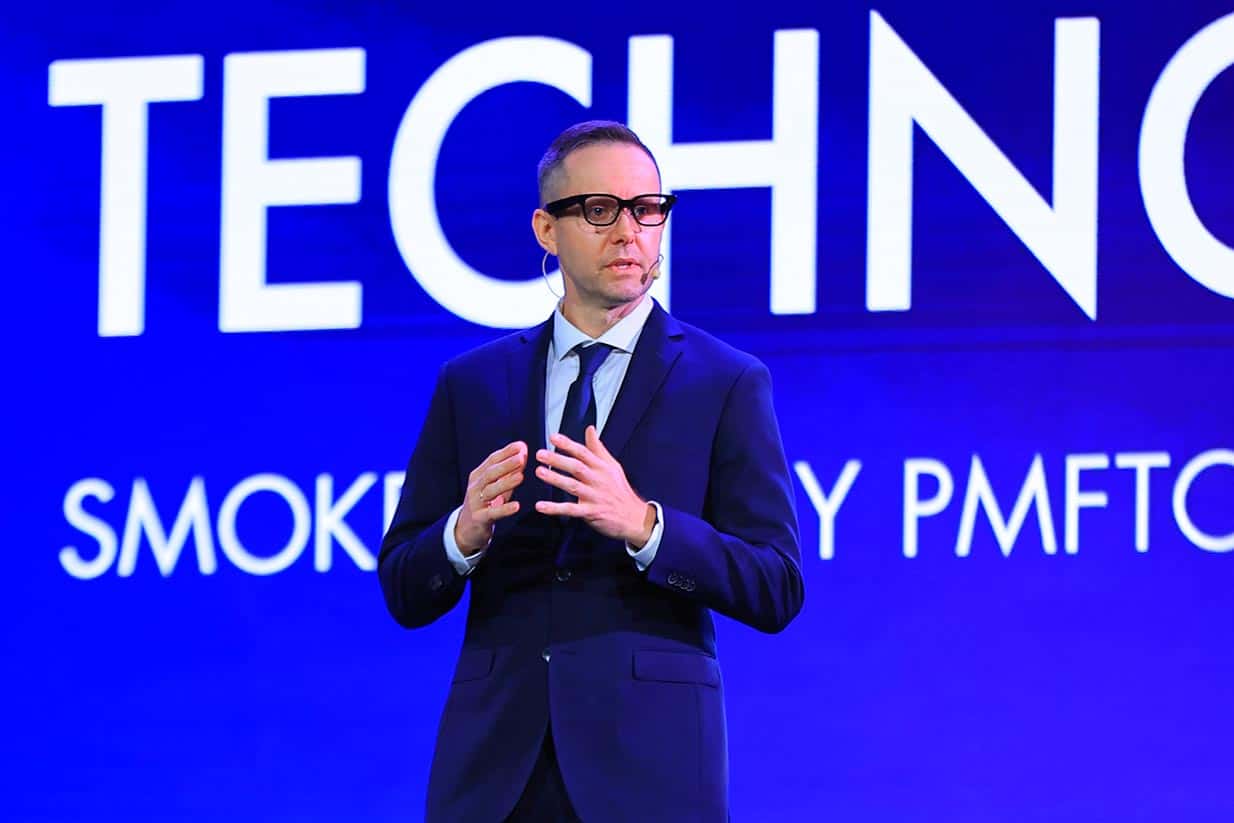
Innovation and the growing availability of smoke-free alternatives are helping reshape Philip Morris International’s (PMI) business as the company continues its transformation toward a future beyond cigarettes, according to PMI President for East & Southeast Asia, Pacific and Global Travel Retail Vassilis Gkatzelis.
At Technovation Manila, held on November 10, 2026, Gkatzelis discussed how scientific advancements, evolving consumer preferences, and regulatory approaches can help accelerate the transition of adult smokers toward smoke-free alternatives.
“What we have seen is that in countries where regulatory frameworks recognize that not all nicotine products are the same, we see a much faster transition to smoke-free alternatives,” Gkatzelis said. “When you have the combination of access, information, right regulation, and proper enforcement, we see that cigarette smoking declines faster.”
During a fireside chat with lawyer and TV anchor Karen Jimeno, Gkatzelis discussed PMI’s ongoing transformation and the role of innovation in making smoke-free alternatives more accessible to adult smokers who would otherwise continue smoking.
His remarks came as PMI continued to expand its smoke-free business globally. As of the third quarter of 2026, smoke-free net revenues accounted for over 40 percent of the company’s total net revenues, with smoke-free products available in 110 markets and used by more than 43 million adults worldwide.
PMI has also invested more than USD 16 billion globally in smoke-free research and development since 2008. According to the company, 99 percent of its adjusted R&D expenditure is now directed toward its smoke-free business, supported by more than 1,600 specialized R&D positions.
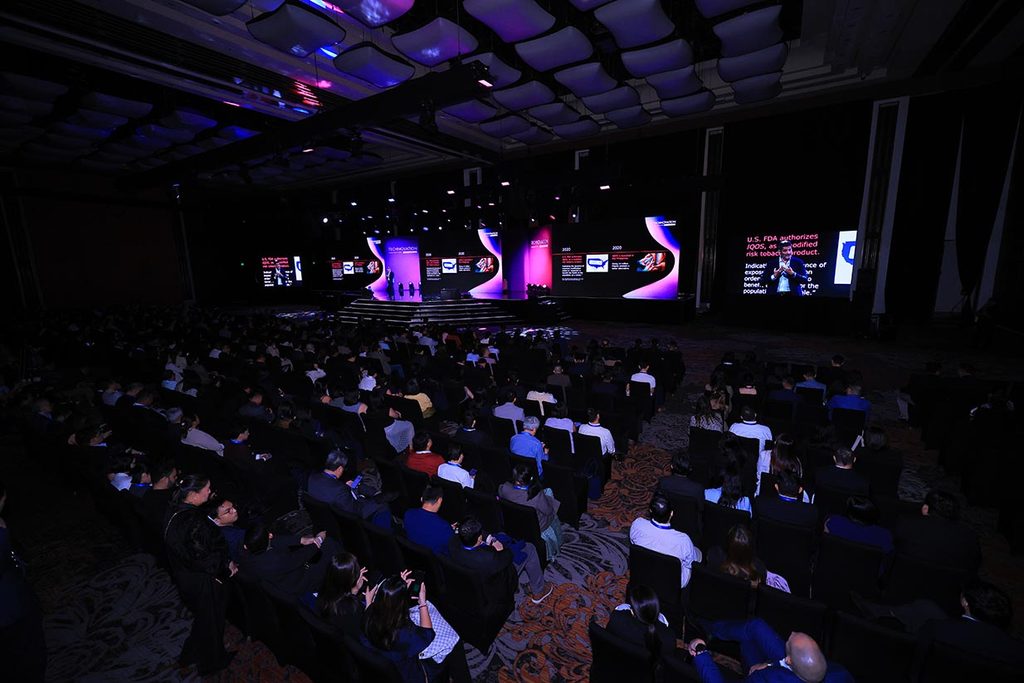
Gkatzelis was among the senior executives and experts who participated in “TECHNOVATION: Smoke-Free by PMFTC,” the company’s flagship science and innovation summit brought to the Philippines for the first time by PMFTC Inc., PMI’s Philippine affiliate.

Held at the Manila Marriott Hotel in Pasay City, the summit brought together policy experts, scientists, health experts, and industry leaders for discussions on tobacco harm reduction, product innovation, consumer education, and evidence-based regulation.
In his welcome remarks, PMFTC President Zhenya Ivanov highlighted the Philippines’ role in PMI’s broader transformation.
“We have held conversations about science and innovation in different parts of the world. But bringing Technovation to Manila is special to us because the Philippines has an important role to play in our company’s transformation toward a smoke-free future. We want to share not just where we’re headed as a company, but also the science, technology and thinking behind this journey,” Ivanov said.
A key theme of the summit was the importance of science-based information in helping adult smokers better understand the differences between combustible cigarettes and non-combustible alternatives.
PMI leaders emphasized the need to correct misconceptions about nicotine and smoking-related harm. Experts noted that while nicotine is addictive and not risk-free, many of the harmful chemicals associated with smoking-related diseases are produced through the combustion or burning of tobacco.
They also highlighted the importance of appropriate regulatory frameworks and safeguards in supporting informed consumer decisions.
PMI Vice President Communications and Engagement Tommaso Di Giovanni discussed the broader value of innovation, emphasizing that its success should be measured by its impact on people’s lives rather than technological advancement alone.
“The true measure of innovation is the positive difference it can make in people’s lives, not how advanced a technology is. At its best, innovation gives us the power to tackle complex challenges and turn scientific progress into progress for society,” he said.
Di Giovanni also emphasized that meaningful progress begins with developing better solutions to existing challenges, even when emerging technologies initially face skepticism.
The summit featured a scientific and public health panel with University of Louisville Professor Emeritus Brad Rodu, public health expert Dr. Sharifa Ezat Wan Puteh, psychiatrist Dr. Tomohiro Shirasaka, and urologist Dr. Rogelio Varela Jr.
Moderated by PMI Head of Scientific Engagement for East Asia and Australia Yvonne Khoo, the panel examined the role of scientific research, product innovation, and evidence-based regulation in reducing the harm caused by cigarette smoking.
Swedish trendspotter Magnus Lindkvist also shared perspectives on disruptive innovation and how emerging technologies continue to transform industries and consumer behavior.
Meanwhile, PMFTC Senior Director for Smoke-Free Products Vickna Tharmalingam presented PMI’s multicategory smoke-free portfolio, including the induction-heated IQOS ILUMA i and ZYN nicotine pouches, highlighting the company’s continued investment in product innovation.
The summit also examined the importance of regulatory approaches and consumer access through its “Voices of Change” panel, featuring Martin Cullip of Taxpayers Protection Alliance’s Consumer Center, Rachmadin Ismail of Indonesian news outfit Tirto.id, and PMFTC Director for Regulatory and Scientific Affairs Atty. Marco Santiago.
Moderated by PMFTC Communications Director Atty. John Peter Ferdinand Echiverri, the discussion drew on international experiences to explore how regulation, consumer access, and tobacco harm reduction can support the shift away from cigarettes.
Closing the summit, PMFTC Senior Director for Corporate Affairs Atty. Chita Herce called for greater collaboration among government, industry, and other stakeholders to translate scientific innovation into meaningful progress.
“Science can open new possibilities. But we turn innovation into progress only when we work together,” Herce said. “If today’s conversations have helped us better understand the science, consider new perspectives, or ask more informed questions, then I believe we’ve made a worthwhile start.”
Herce underscored the importance of informed dialogue, evidence-based policies, and responsible regulation in advancing a smoke-free future.