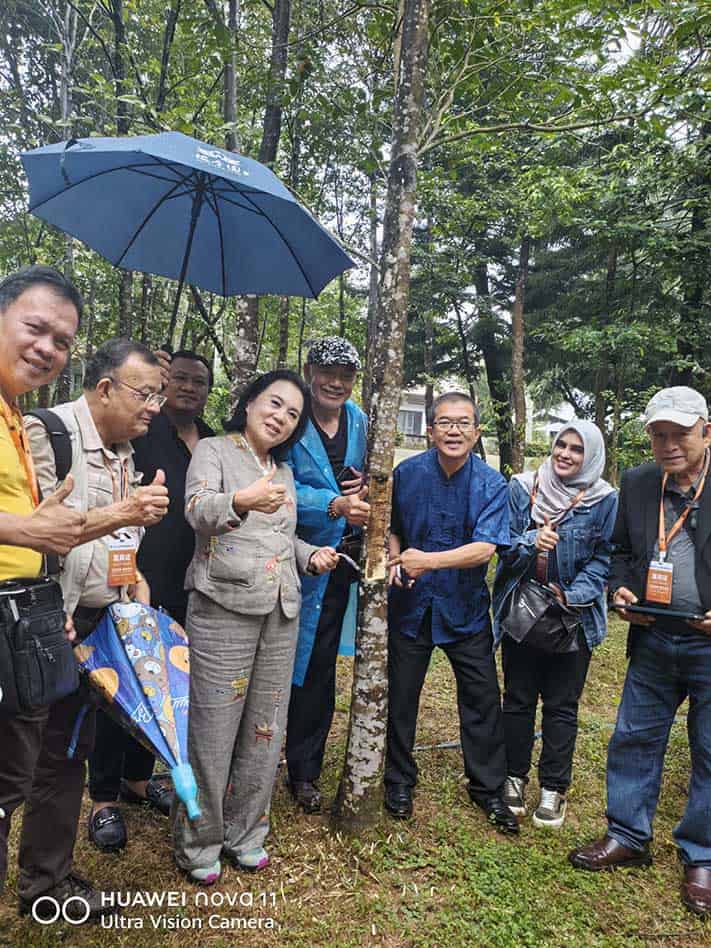
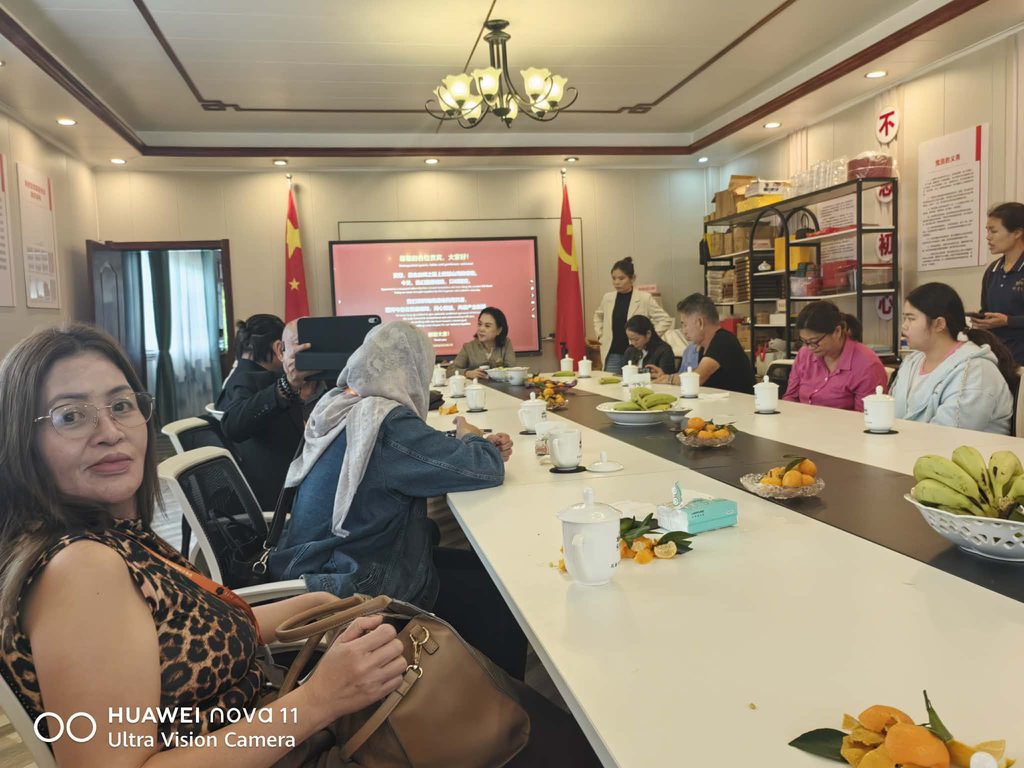
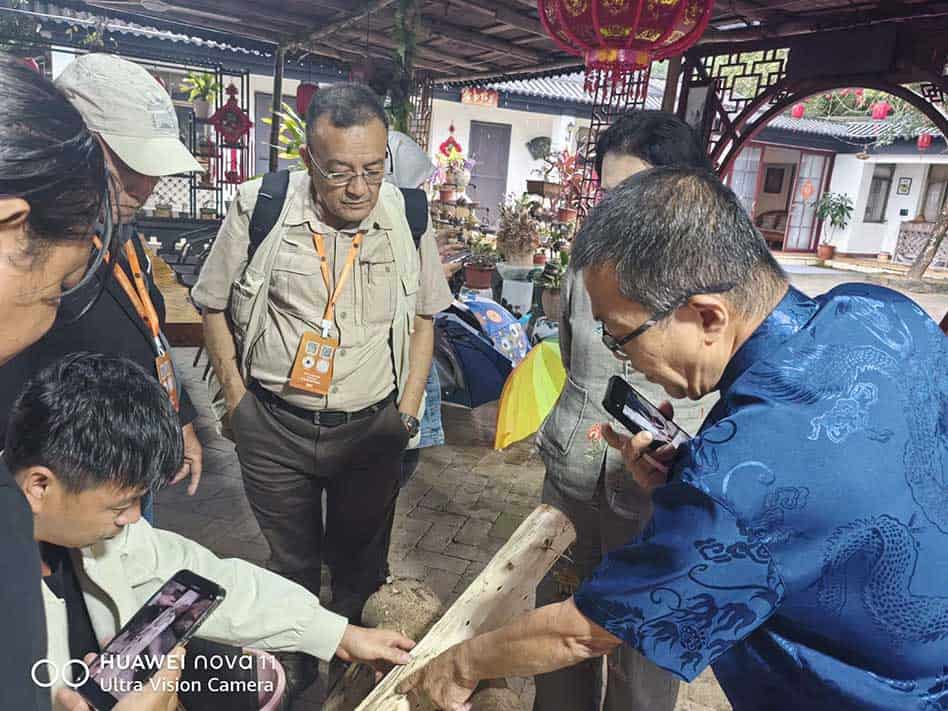
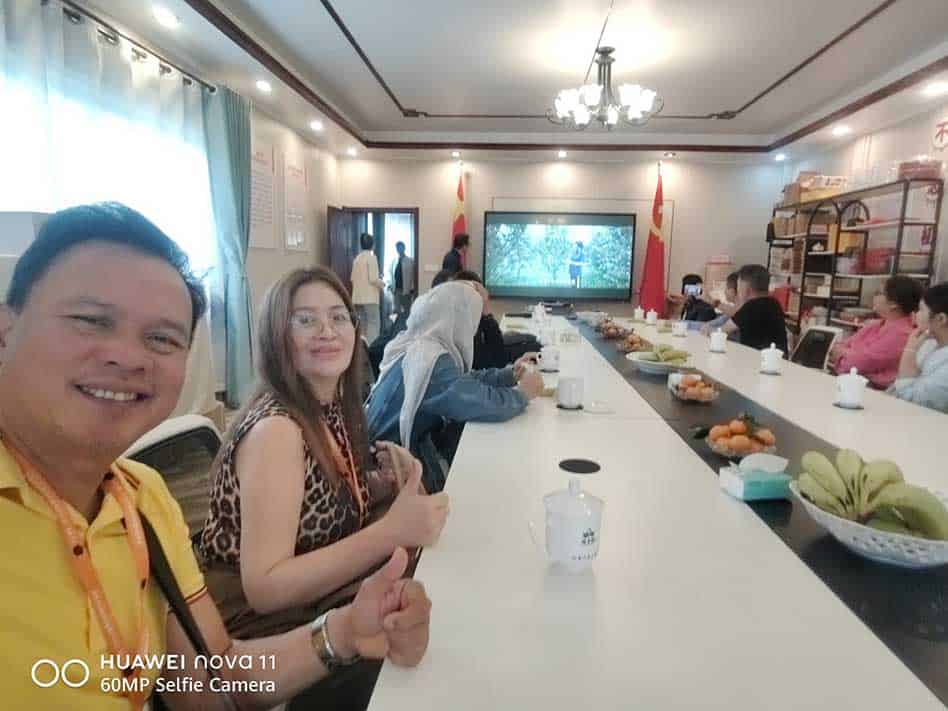
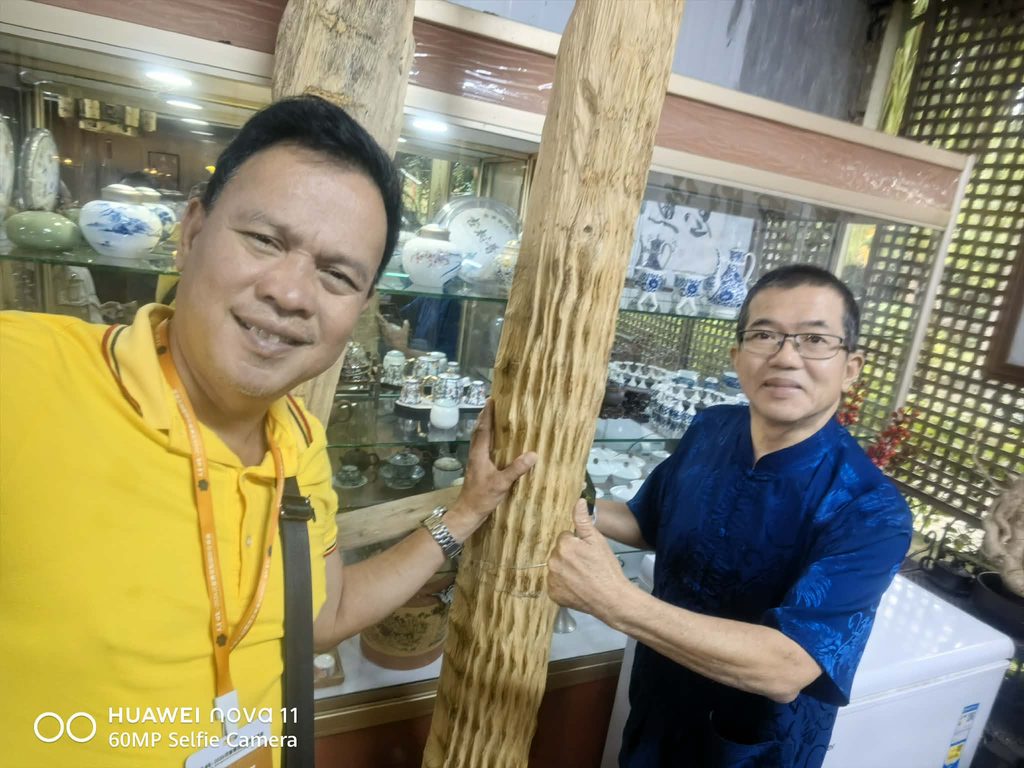
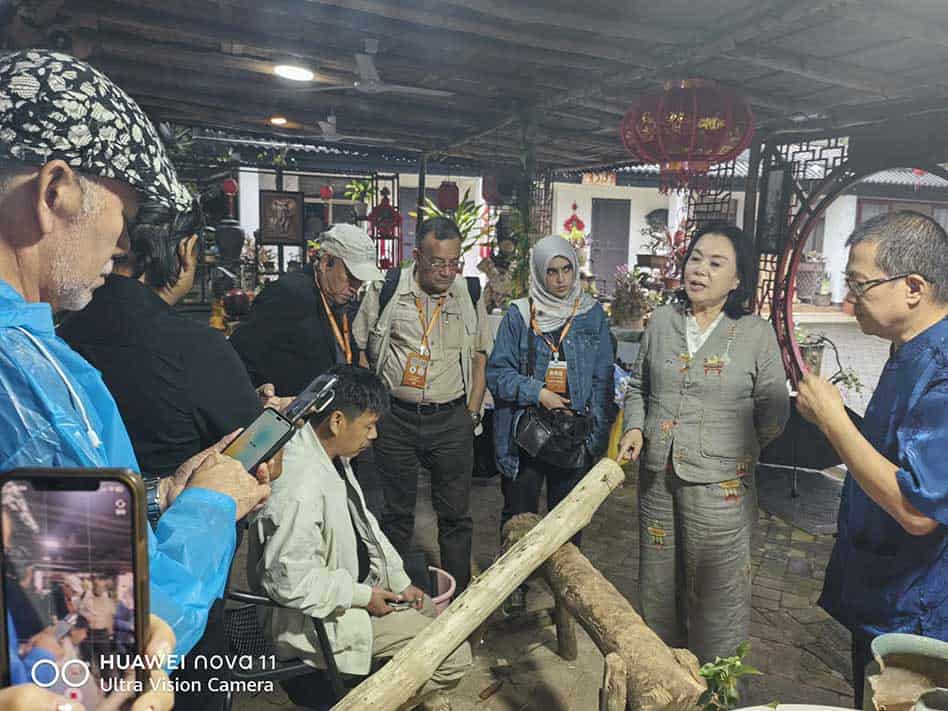
HAIKOU, HAINAN – Delegates from the Philippines, Malaysia and Indonesia joined Chinese participants at the recent 3rd Agarwood International Trade Fair, held November 21 to 25 in Hainan, for a discussion on agarwood medicinal products, pricing, cultivation and export. The discussion included International Agarwood Consultant Dr. Tan Kim Ting and Philippine agarwood consultant Dr. Danilo Virtudazo, who each have two decades of experience in the agarwood industry. As part of the fair activities, the delegates visited the agarwood plantation of Wang Haixiang, Chairperson of Haixiangyuan, Hainan, China, who hosted the delegates in their agarwood farm and showroom. The Chairperson introduced the medicinal purposes of agarwood based on their experimentations and natural cultural practices.
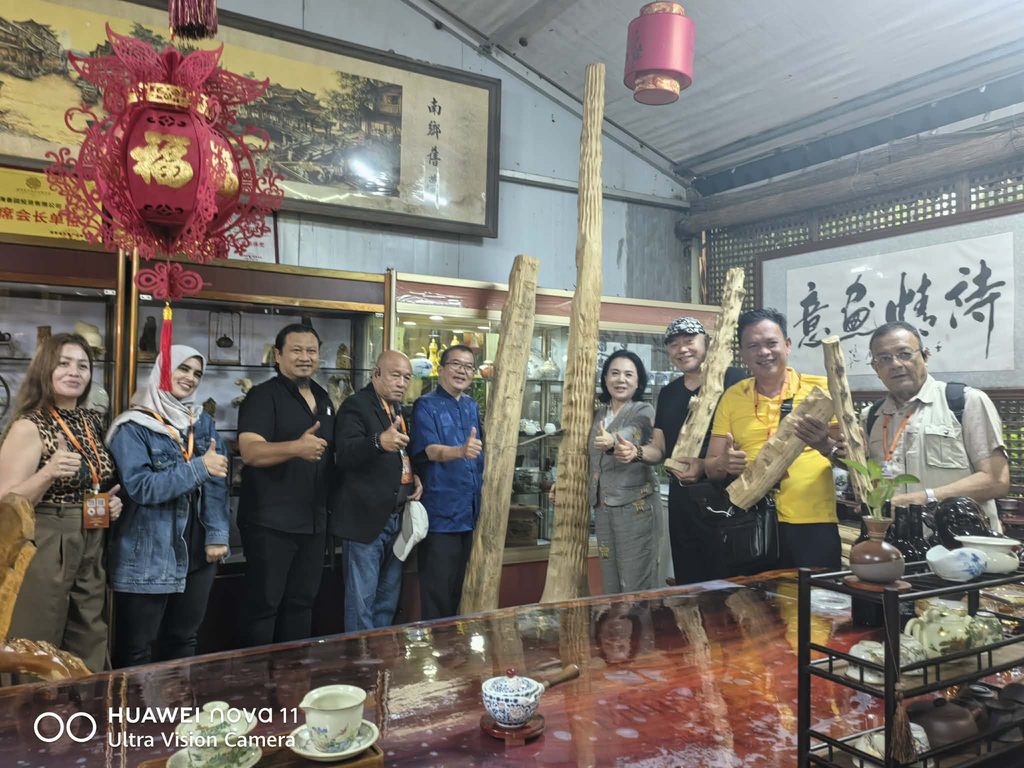

The accommodation list shared for the fair included Tan Kim Ting from Malaysia, Danilo Virtudazo from the Philippines, Dante Sudaria and Rose Mary Sudaria from the Philippines, Siti Ruqayyah Taufani Suhaimi Abdur from Indonesia, Yong Him Seng from Malaysia, Ramzi Salim from Indonesia, and Rahik Abdat from Indonesia. For delegates from the Philippines, Malaysia and Indonesia, the fair provided a platform to compare cultivation practices, product standards and market opportunities across the region.
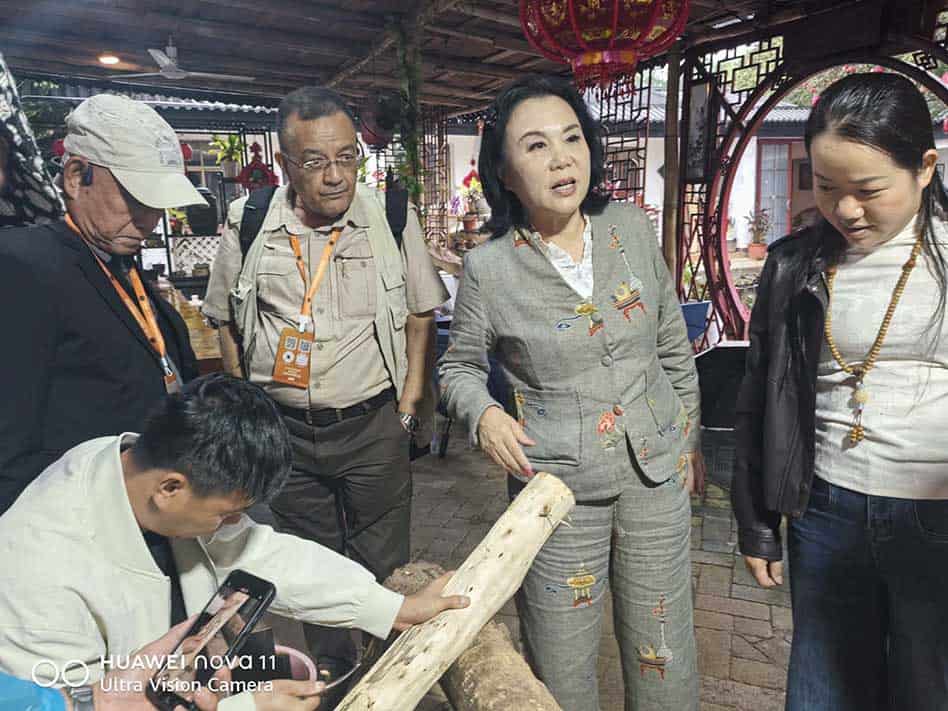
Display products were mostly presented in white wooden boxes and were described as carrying a geographical indication, reinforcing Hainan agarwood’s origin branding. Product specifications mentioned included a 50-gram pack, and small single-petal products priced at around 3,000 yuan each. Single-jar products with geographical indication were also shown, though their contents, capacity, and full pricing were not disclosed.
The session centered on the Haixiangyuan farm, its claimed unique technology, and a premium-priced product that participants say contains an unusually high level of a key compound. Speakers described the product as appearing ordinary on the outside, while claiming it has strong medicinal value. They asserted that the underlying technology is not available elsewhere, though that claim was presented as an assertion and was not independently verified during the discussion.
A central claim was Agarwood Tretol, identified by participants as the key content used to distinguish the product. The product was said to contain 8.5 times the normal level of Tretol, while comparable materials were described as having extremely low concentrations. Participants linked that elevated level to whether agarwood can be used medicinally under Chinese medicine standards or pharmacopoeia references, and presented it as the main rationale for selling the product at a higher price. The exact scientific definition of Tretol, how it was measured, and independent validation of the 8.5-times figure were not provided.
Participants introduced Chen Xiang Shi Chun as an important technology or identity associated with the medical use of agarwood, but its precise meaning remained unclear during the exchange. One participant indicated that the relevant terminology or explanation would be located for further clarification.
Participants described the village as using organic plantation methods rather than chemical fertilizer, and said its farm is certified by an organic organization. Speakers presented the village as different from other villages because of these practices. The Chairperson linked these natural cultural practices and farm-level experimentations to the medicinal purposes presented to the visiting delegates.
Speakers stressed that variety matters, even under identical cultivation. Participants explained that leaves differ in shape and variety. During the session, one speaker recited numbered labels from 1 through 11, while another identified 7 varieties and gave examples including varieties 1, 2, 4, 5, 7, and 8. The same cultivation method was said to produce different results because the plant variety changes. A reference was also made to 14 years, but its precise context was not made clear.
A key debate centered on cultivation methods. Participants suggested that seedlings grown directly from fallen seeds, described as green seedlings, are purer and may develop stronger taproots and better growth performance than grafted seedlings. Seed selection and cultivation were said to depend on the year’s seed supply, seasonal conditions, and water availability, all critical factors in Hainan’s tropical climate. Questions were also raised about whether the products are used for pharmaceutical purposes and whether grafted varieties are included, but no complete answers were given.
Much of the discussion centered on laboratory references offered as support for medicinal qualification. Participants referred to cooperation with China’s Lin Ke Yuan and an image associated with the Hainan Science and Technology Hall. A Chen Xiang test report was attributed to China’s Linhe Hospital, while a separate government-department laboratory test was described as showing medicinal content and qualifying the material as suitable for medicine. The discussion did not clarify the exact substance tested, nor did it provide detailed laboratory measurements, dosage, or testing methodology. Participants themselves stressed that product claims should be scientific and supported by proof rather than relying only on verbal descriptions, and that the product must meet national standards in order for the business to operate. The agarwood identity or content test was described as a method for determining whether the material qualifies for medicinal use.
The discussion showed Hainan agarwood is moving beyond local retail. Participants pointed to industrial-scale seedling exports and related development, signaling ambitions to expand overseas. For delegates from the Philippines, Malaysia and Indonesia, the fair provided a platform to compare cultivation practices, product standards and market opportunities across the region.
By the end of the discussion, several key questions remained open: the specific diseases agarwood can treat, the exact meaning of Chen Xiang Shi Chun, the independent validation of the claimed technology and Tretol level, how the product meets national standards, and whether grafted varieties are included and whether the products are used for pharmaceutical purposes. Observers say that as Hainan agarwood pushes further into medicinal and export markets, clearer scientific evidence, standardized testing, and transparent pricing will be essential to protect both producers and buyers.