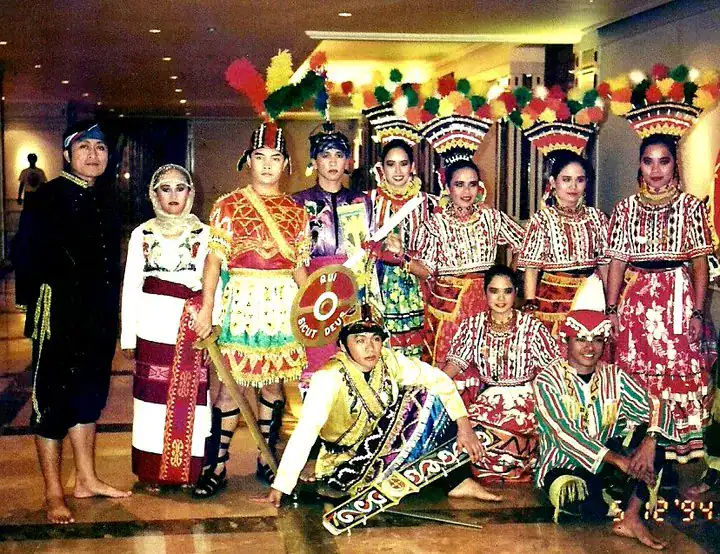
IPAG’s story is a model of fortitude, resilience, and conquest as it journeys towards its Gold Year in 2027. Its gripping history is likened to a full-length play where a Prologue opens 3 Acts towards a triumphant climax.
The first performances were experiments produced by a band of young neophytes. Ripened by experience, these artists established Methods of shaping expressions that have become the IPAG brand of theatre.
Hosted by the MSU-Iligan Institute of Technology (MSU-IIT) for 46 years, IPAG’ relocated outside the campus in 2023. The Institute well supported IPAG’s advocacy. While there were no funds, IPAG being external to the MSU-IIT system, the Institute still provided whatever it could muster in the logistics for performances, rehearsals, and operations— and most important of all — a captive audience.

1977. Twelve friends bonded, sharing the same interests and a vision. With newly graduated 22-year-old Steven Patrick Fernandez at the helm, the foundation of what has become a major Philippine performing arts company evolved.
1978. IPAG was formally organized on August 10, 1978, encouraged by the Board of Regents’ approval to establish the School of Performing Arts. The legacy of visionary Vice President Manaros ‘Naroh’ B. Boransing stamped. To organize the school, Boransing invited pangalay guru Ligaya Fernando-Amilbangsa from Tawi-Tawi.

IPAG sought to meet with Ligaya to seek advice. From what was then the Integrated Theater Arts Group (ITAG) it was renamed the Integrated Performing Arts Guild (IPAG).
[Amilbangsa consequently became the Honorary Chairman of its Advisory Council, with Fernandez as its Artistic and Executive Director. In the Council were these pioneers: Ricardo Jorge S. Caluen (Administrative Affairs), Juliet Celeste F. Malit and Nenita Cristobal (Dance Company), Dominador Nadayag and Gloria Sescon (Creative Drama and Acting), Anita Sescon (Creative Writing), and Dennis Orellana (Visual Arts).]
Amilbangsa would stay at MSU-IIT in the next few months as she had other commitments. She remained, however, in touch with the Guild from her creative space in Marikina, helping out the derived methods which have now become the IPAG signature expression.
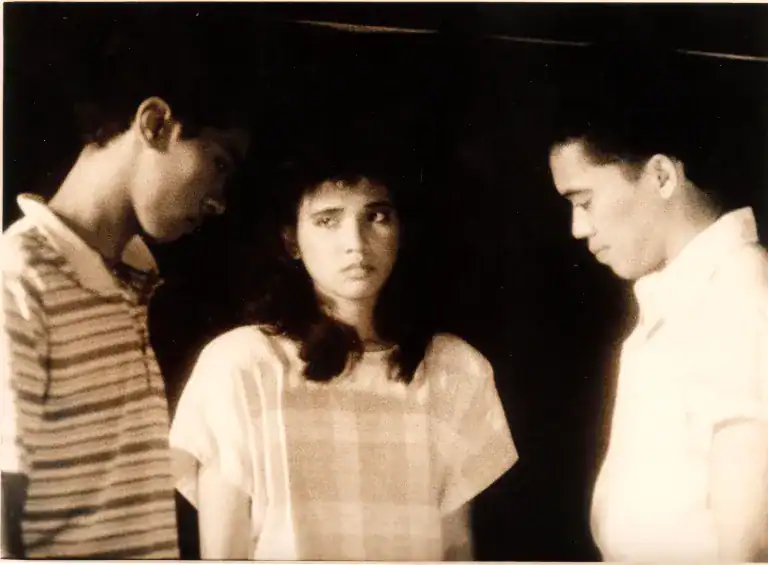
The Originals
These pioneers, who were present even before 1978, figured prominently in IPAG’s infant years.
Ricky (IkIk, as we fondly called him, our Music Director) was fresh off from the La Salle Brotherhood, who was currently performing Godspell at that time, too. Active, too, were Paeng Mijares, our first Production Manager, Dino Quijano, Love Joy Orbe (the original “diva” who would forever be active with IPAG to the present), and the friendship triumvirate of Juliet Fernandez-Malit, Otette Escarda, and Joji Larazabal.
Then there was Jamalludin ‘Maymay’ Alonto who met Minda Legaspi and who eventually became a couple to become one of the more successful restaurateurs in Iligan. Dancers Mitchie Lou Gaite, Tata Padilla-Cabrera, Daisy Paquingan-Caberte, actors Andoy Calicdan, James Tevar, Boyet Nadayag, Sonny Perocho (who would later join the technical staff of CCP), plus others too many to mention.
In the company, too, was Ric-Ric Marata, who would become one of the notable basketball stars of the PBA and the Philippine team.
After Ito Ba filled up the Mini-Theater, IPAG prepared for its next show. The only readily available production-to-be was what our pioneering Resident Choreographer Juliet brought back from her alma mater, the University of Santo Tomas. Juliet, a member of the Salinggawi Dance Troupe, taught at the MSUIIT Physical Education Dept. Salinggawi had just completed a version of A Star is Born, the 70s movie starring Barbra Streisand and Kris Kristofferson. We took the opportunity to stage this, Juliet’s first choreographic work for IPAG, using jazz and contemporary dance as idioms.
Dr. Angelo Manalo, a medical doctor who led one of Iligan’s Rotary Clubs, also a concert enthusiast, culturati, and an organizer of performance events, heard of IPAG’s plans. He immediately booked the Guild with the Rotary as producer paying IPAG two thousand pesos (PhP2,000.00, or approximately US$40) for two shows at the St. Michael’s Auditorium. This was IPAG’s “historic” first professional fee.
Five weeks after its first production and in two months, IPAG had produced two full-feature shows.
The momentum stimulated the company. Another dance concert Fad Jazz was produced in February, three months after A Star, featuring a vaudeville-like format solely showcasing dances of various genres and eras.
The fourth production was a shadow- and hand-puppet show (with an eponymous title) of materials from Philippine folklore under the direction of Amilbangsa.
This first season was capped by the hilarious Jose Ibarra-Angeles one-act comedy Kastilyo ni Kardo which had Rolando Calicdan and Nadayag in the cast (Direction: Gloria Sescon-Fernando). The “confusion” of whether we were a theatre, dance, music, or literary group was to our advantage. “Integrated” was thus true to form; we had become a transdisciplinary company.
-30-