By Mer M. Sudaria
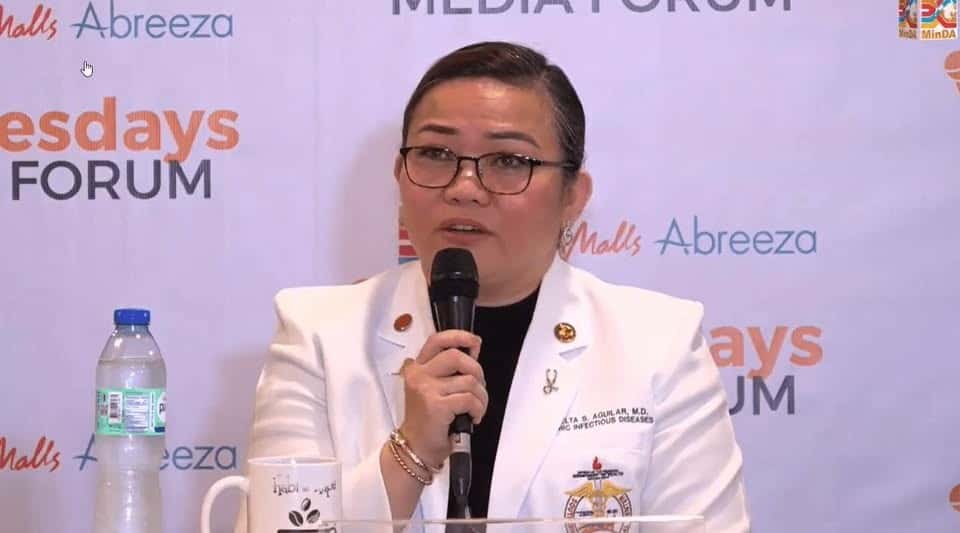
DAVAO CITY — Recurring dengue outbreaks and deaths, particularly among children, highlight the need for a stronger, multi-layered approach to prevention in Mindanao, including vaccination alongside established measures against the mosquito-borne disease, according to pediatric infectious disease specialist Dr. Ma. Delta Aguilar.
Aguilar said dengue prevention requires a comprehensive approach combining mosquito control, disease surveillance, early diagnosis and proper clinical management, public education and vaccination.
The concern remains particularly relevant in Mindanao, where several areas continue to report significant numbers of dengue cases. Zamboanga City, for instance, recorded more than 2,400 dengue cases and 17 deaths from January to August 29, 2026, with children aged one to 10 accounting for more than half of reported infections.
With dengue endemic in the Philippines, Aguilar said prevention efforts must be sustained rather than intensified only when cases begin to surge.
Dengue thrives in tropical and subtropical environments, while changes in temperature, rainfall and other environmental conditions can influence mosquito populations and disease transmission. These factors make dengue a continuing public health challenge and reinforce the need for multiple layers of protection, particularly for children.
Another tool against dengue
Among the newer tools against dengue is TAK-003, commercially known as Qdenga, a live-attenuated tetravalent dengue vaccine developed by Japanese pharmaceutical company Takeda. The vaccine is designed to generate an immune response against all four dengue virus serotypes — DENV-1, DENV-2, DENV-3 and DENV-4.
The World Health Organization prequalified TAK-003 in May 2024. WHO prequalification assesses vaccines against international standards for quality, safety and efficacy and allows them to be considered for procurement by United Nations agencies and other international organizations.
WHO recommends the vaccine for children aged six to 16 years in settings with high dengue transmission intensity. The recommended schedule consists of two doses administered three months apart. WHO guidance does not require pre-vaccination screening for previous dengue infection before TAK-003 is administered.
The vaccine has also received regulatory authorization in a number of countries. The European Commission authorized Qdenga for people aged four years and older, regardless of previous dengue virus exposure.
According to Takeda, Qdenga has been approved in dozens of countries and millions of doses have been distributed globally. These include approvals across parts of Europe, Latin America and Asia.
Clinical evidence for the vaccine includes the Phase III Tetravalent Immunization against Dengue Efficacy Study, or TIDES, which enrolled more than 20,000 children and adolescents across eight dengue-endemic countries, including the Philippines.
The study initially reported overall vaccine efficacy of 80.2 percent against virologically confirmed dengue and showed protection against dengue-related hospitalization. Vaccine efficacy refers to the reduction in the risk of a specified disease outcome among vaccinated participants compared with those who received a placebo under clinical-trial conditions.
Evidence from vaccination programs outside clinical trials is also emerging. In Brazil, where TAK-003 has been introduced into the public vaccination program, real-world studies among adolescents have reported protection against dengue-related hospitalization.
Aguilar said available clinical studies have also provided data on the vaccine’s safety profile, with safety continuing to be monitored as its use expands internationally.
Vaccination as part of broader prevention
Aguilar emphasized that vaccination is not intended to replace established dengue-control measures but to provide an additional layer of protection.
Eliminating mosquito breeding sites, protecting people from mosquito bites, strengthening disease surveillance, recognizing warning signs and seeking medical attention early remain critical in preventing infections and reducing severe disease and deaths.
WHO likewise places dengue vaccination within a broader integrated strategy that includes vector control, appropriate case management and community engagement.
For Mindanao communities that continue to experience dengue outbreaks, hospitalizations and deaths, particularly among children, the availability of additional preventive tools could strengthen existing public health efforts.
Aguilar said the continuing burden of dengue underscores the importance of maintaining prevention efforts throughout the year.
As dengue remains endemic in the Philippines, she said vaccination, when used in accordance with public health and regulatory guidance, can complement mosquito control, surveillance, early detection and proper medical care in reducing the impact of the disease on families and communities.