By Shaun Alejandrae Uy
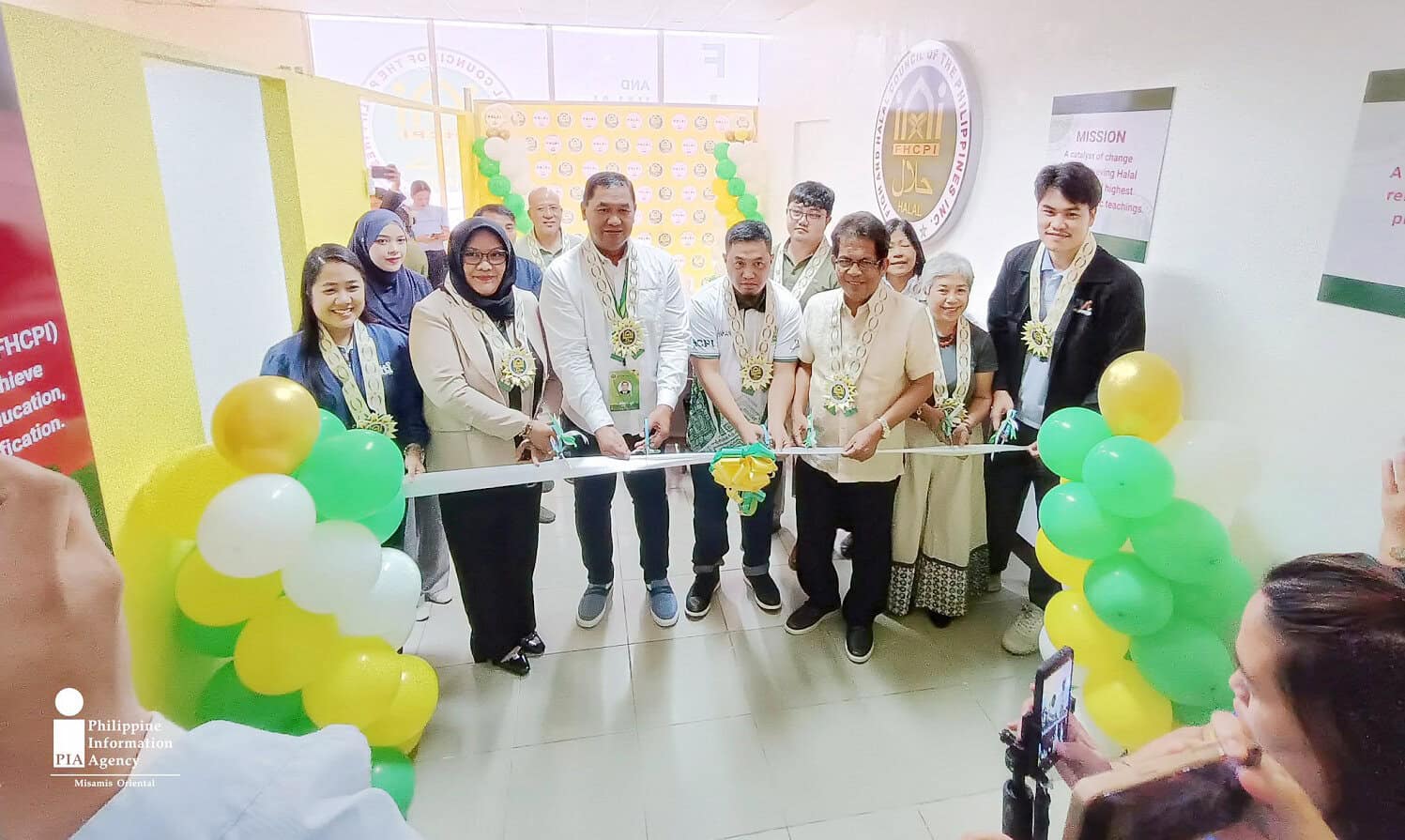
CAGAYAN DE ORO CITY (PIA) — Micro, small and medium enterprises (MSMEs) in Northern Mindanao can now avail halal certifications more easily following the opening of a satellite office of the FIQH and Halal Council of the Philippines Inc. (FHCPI) at the Cagayan de Oro Chamber of Commerce and Industry Foundation Inc. (Oro Chamber) Development Centre on July 16.
The new office is expected to reduce travel costs and processing time for businesses seeking halal certification by providing local access to certification services previously available only outside the region.
The initiative supports President Ferdinand R. Marcos Jr.’s push to develop the country’s halal industry as a driver of trade, tourism and investment, while expanding opportunities for Philippine businesses to compete in domestic and international halal markets.
Department of Trade and Industry (DTI) Misamis Oriental Provincial Halal Coordinator Melanie Legara said the presence of a halal certifying body in Northern Mindanao will help more enterprises obtain internationally recognized halal certification, which buyers in Muslim-majority countries often require.

FHCPI Chairman of the Board Sultan Faisal Benaning Bansao said the satellite office was established to make halal certification more accessible and encourage more enterprises to participate in the halal economy.
“Every time we join international trade fairs, buyers from Malaysia, Indonesia and other Muslim countries ask if our products are halal certified. Now we can expand our assistance to all our MSMEs for them to be halal certified because the certifying body is already here,” Legara noted.
The Department of Tourism said the development complements its implementation of the Muslim-Friendly Accommodation Establishment Standards, which encourage accredited establishments to pursue halal certification to serve Muslim travelers best.
FHCPI Chairman of the Board Sultan Faisal Benaning Bansao said the satellite office was established to make halal certification more accessible and encourage more enterprises to participate in the halal economy.
“We are here to help MSMEs and those who want to become halal certified,” Bansao said.
He said businesses will continue to undergo laboratory testing and on-site audits. However, the presence of a local certifying body eliminates the need for auditors to travel from outside the region, reducing costs and improving the efficiency of the certification process.
FHCPI President Aleem Shahani Mustapha said halal certification verifies compliance with standards on food safety, sanitation, ingredient sourcing, storage, logistics and the prevention of cross-contamination.
“Halal is not only about being free from pork. It also means the products are clean, safe, fresh and free from harmful substances,” Mustapha said.
For Sonjie Ang, owner of Zubaibai Seafood Restaurant in Cagayan de Oro City, local access to halal certification has encouraged more businesses to consider the process.
Ang said she initially thought certification would be difficult and costly but found the process manageable with guidance from the council. Zubaibai later became one of the first halal-certified restaurants in the city.
“It was really very smooth for us. You just have to follow the process and ask what the requirements are. Hopefully, I can inspire other restaurants because the more establishments that become halal certified, the more tourists and customers we can attract,” Ang observed.
She said halal certification has strengthened customer confidence and created opportunities to reach more customers, adding that wider adoption among local establishments could also support tourism and regional economic growth.
Business leaders believe the new office will strengthen Northern Mindanao’s competitiveness as the region attracts more domestic and international visitors.
Oro Chamber President Almarco C. Brito said the opening of the FHCPI office is a milestone for the organization and its members.
“Cagayan de Oro is becoming an emerging tourism destination. Visitors, especially from Muslim communities, look for halal-certified restaurants and food. Having the Halal Council here makes certification much more accessible,” Brito said. (SAYU/PIA-10/Misamis Oriental)