By Mike Baños (as related by Sharina Cabaraban Domingo)
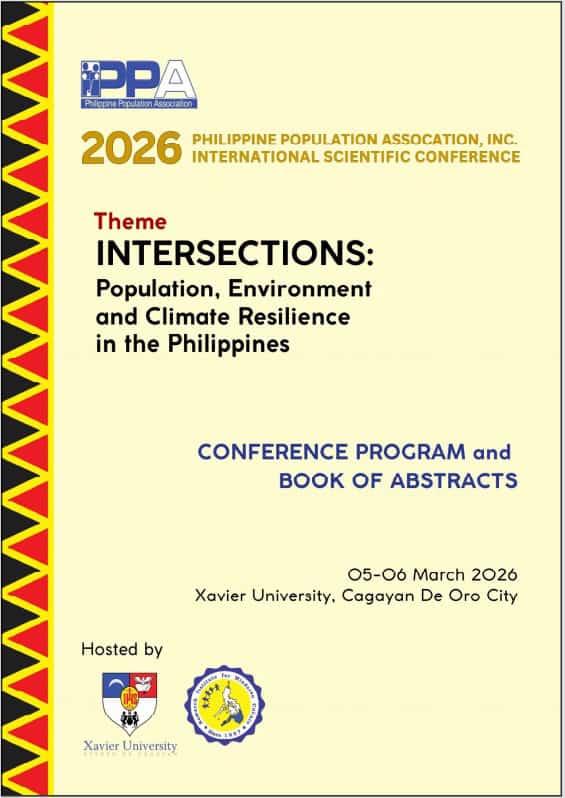
CAGAYAN DE ORO CITY- A pioneering Kagay-anon social scientist has been honored during the closing program of the 2026 International Scientific Conference of the Philippine Population Association (PPA), where she served as President and a member of the Board of Trustees.
The PPA is the premier professional organization for demographers and social scientists in the Philippines. It serves as a vital platform for the dissemination of demographic data on critical issues such as reproductive health, internal and international migration, and changing age structures.
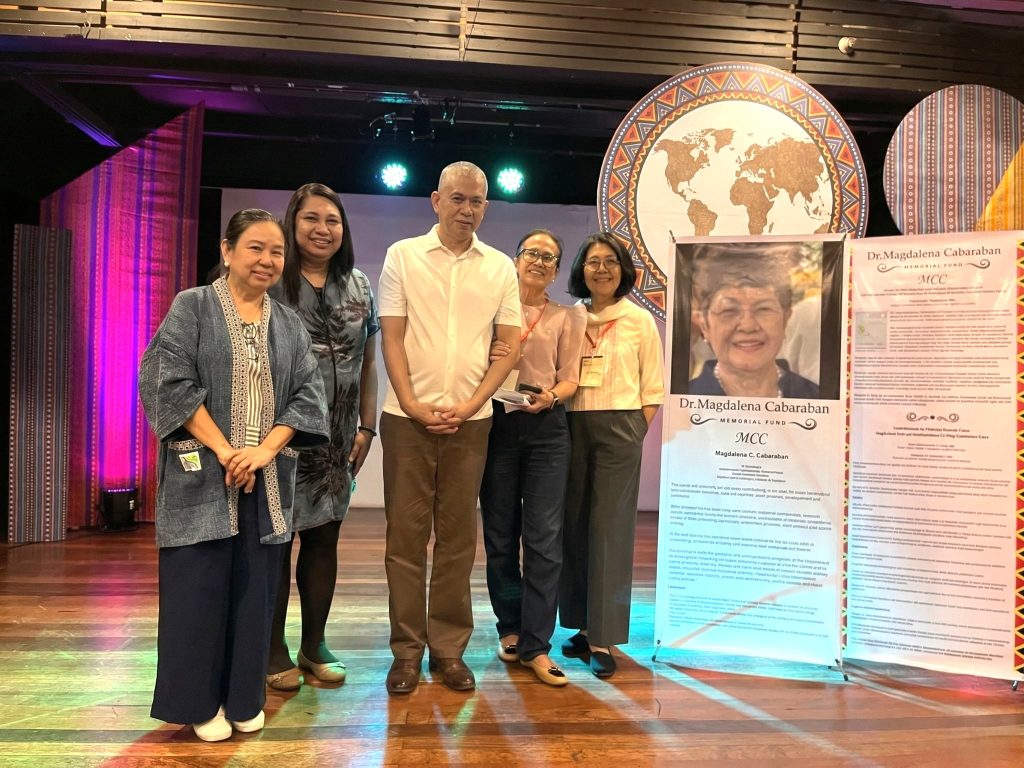
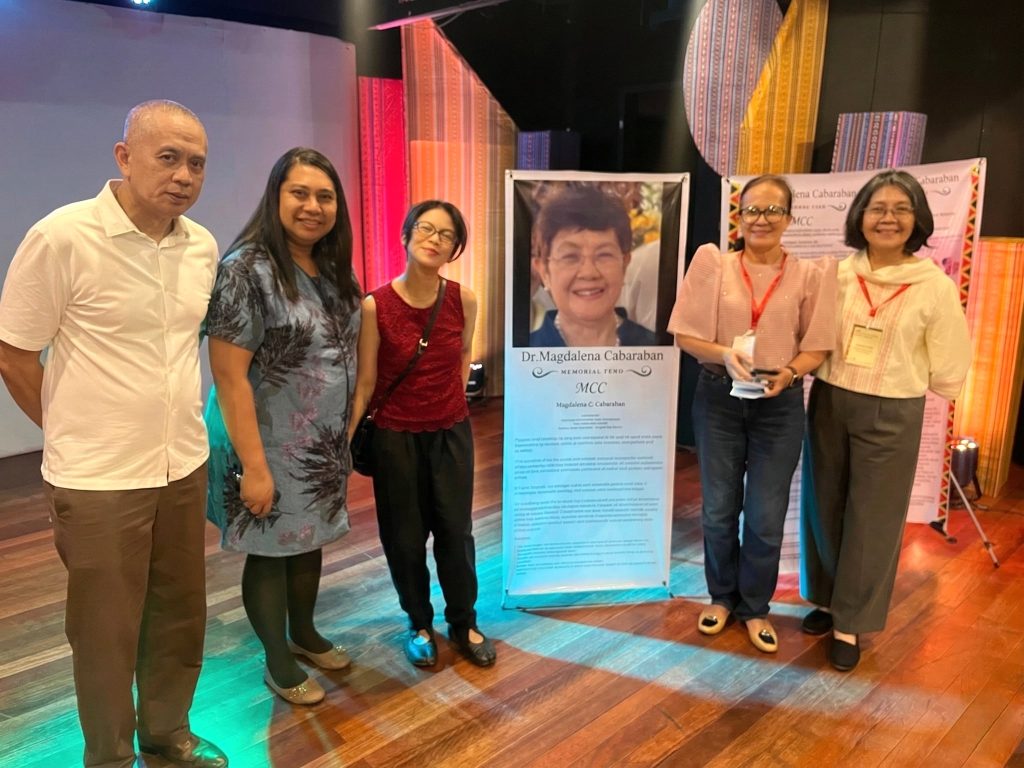
Held March 5, 2026, at Xavier University-Ateneo de Cagayan (Xavier Ateneo) where she dedicated over five decades intersecting rigorous statistical demography with social advocacy for the grassroots, the MCC MEMORIAL FUND is dedicated to the legacy of Dr. Magdalena Canag Cabaraban and aims to fund further research into critical issues facing the Philippines today.
“The MCC Memorial Fund is a tribute to a woman who believed that data is most powerful when it is used to serve the vulnerable,” said Don Antonio Velez, Executive Assistant and PhD Sociology Candidate. “By launching this fund during the PPA International Scientific Conference, we ensure that her commitment to evidence-based policy continues to inspire researchers.”
The launch of the fund served as the cornerstone of the PPA conference with the theme INTERSECTIONS: Population, Environment, and Climate Resilience in the Philippines which brought together demographers, academics, and policymakers to discuss the “demographic dividend” and push the sustainable development agenda.
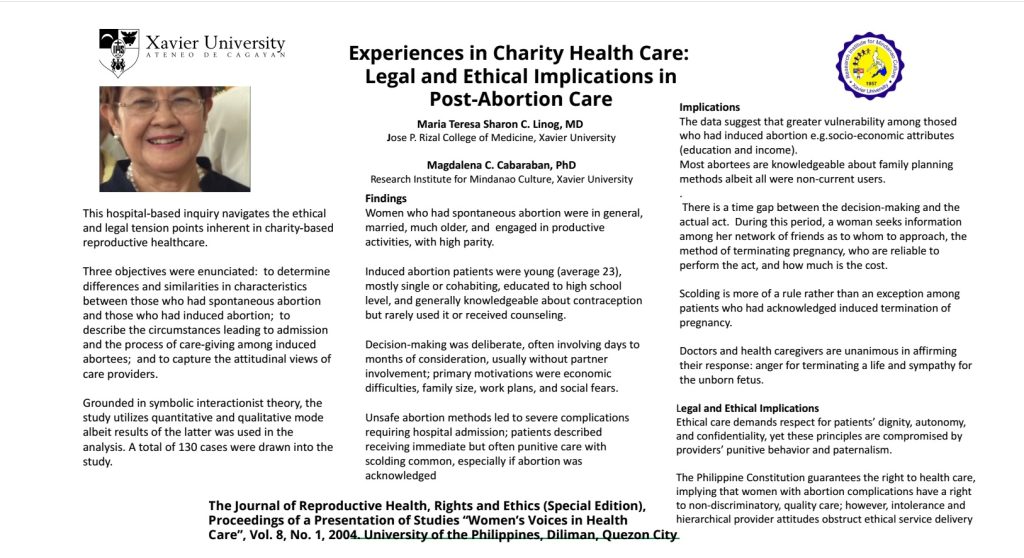
Earlier, the conference also devoted one of its breakout sessions entitled “Inside the Magdalena Archives: Embodiments, Beliefs, and Care for the Voices in the Margins” to the discussion of research topics showcasing Dr Cabaraban’s favorite social issues involving spousal health care, gendered imperatives in Filipino families, intergenerational attitudes of Filipino women on reproductive self-care, among others.
A Half-Century of Disciplined Inquiry
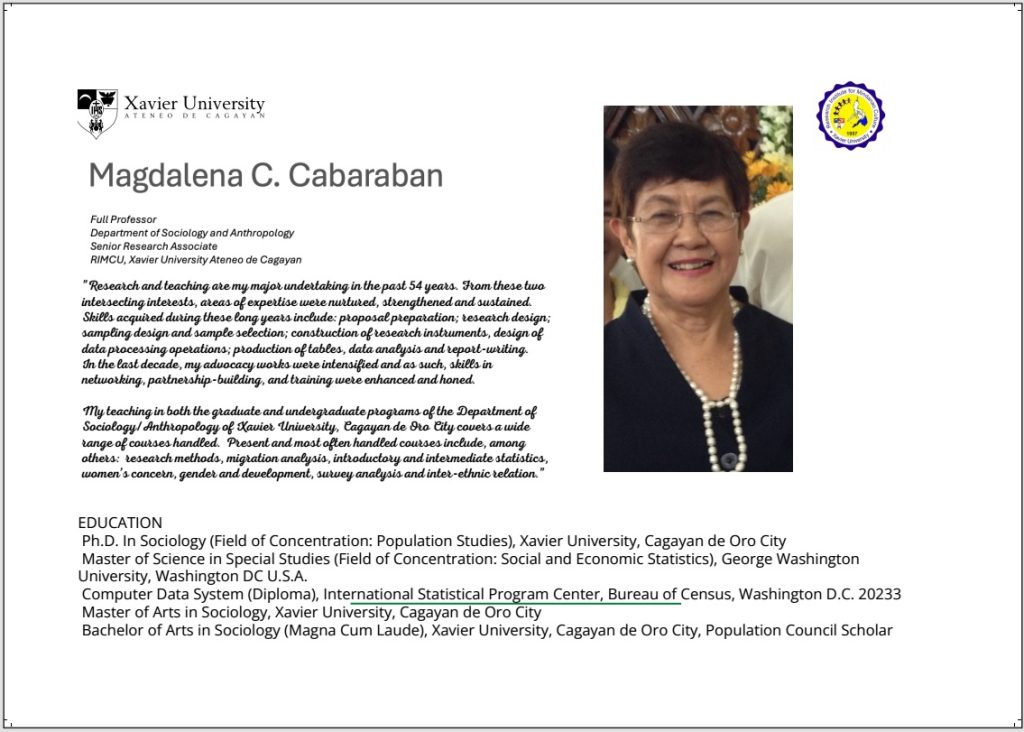
Dr Cabraban began her journey in the early 1970s a student of Sociology in Xavier University graduating as Magna Cum Laude. Following the completion of two master’s degrees, she moved into graduate-level instruction.
Her early aptitude for research was recognized in 1976 by the Southeast Asia Population Research Award Program (SEAPRAP), and in 1980, she was awarded a World Health Organization (WHO) grant for advanced studies in the United States. She earned her degree in Social and Economic Statistics from George Washington University and a diploma in Data Processing Systems from the U.S. Bureau of Census before obtaining her PhD from Xavier University.

A Pillar of Mindanao Demography
Working alongside the late Fr. Francis Madigan SJ, Dr. Cabaraban developed a mastery of Mindanao’s socio-demographic landscape that remains unparalleled. Together, they mapped the development track of the region with a precision arising from decades of immersion. Throughout her tenure, she commanded the entire technical lifecycle of research—from sampling design and instrument construction to complex statistical analysis.
From the late 1980s through 2022, her portfolio addressed the most critical social issues of our time including Governance & Peace: Mindanao autonomy and regional stability; Public Health: Malnutrition, maternal and child health, and reproductive health; Social Protection: Adolescent mental health, gender equality, and the prevention of violence against women and children; and, Environment: The human impact of climate change.
Advocacy Grounded in Data and Mentorship the Ignatian Way
Dr. Cabaraban’s scholarly work was inseparable from her advocacy. As the founder of the Women’s Forum of Region 10, she translated data into initiatives for gender sensitivity and protection. Her ability to secure funding from international bodies—including USAID, UNICEF, UNFPA, and the World Bank—was a testament to the international community’s trust in her methodological integrity.
Her approach evolved from purely quantitative demography to a sophisticated blend of qualitative and quantitative methods. Despite her international reach, her primary devotion remained at Xavier Ateneo, where she dedicated her life to shaping the next generation of social scientists at, teaching migration analysis, inter-ethnic relations, and research methods.
Dr. Cabaraban was an embodiment of grace and elegance in a field often defined by cold numbers. She remained a firm believer that the confluence of research, teaching, and advocacy does not just widen people’s horizons; it makes them better grounded and effective social scientists.
Family Legacy
Beyond the accolades and international grants, Dr. Cabaraban’s life was anchored by her family. She was a devoted wife to the late Henry L. Cabaraban – who served most of his life in the trial courts in Cagayan de Oro; a north star to her children: Dr. Sharon Linog, Department Head for Research of the Northern Mindanao Medical Center (NMMC 10), Engr. Sheila Cabaraban, CEO and President of the Philippine National Oil Company (PNOC), Engr. Shane Cabaraban, Chairman of the Department of Engineering of Xavier University- Ateneo de Cagayan, Criselda Cabaraban Langstaff – a gerontology care specialist based in San Jose, California, USA; Sharina Cabaraban Domingo– CEO and President of The Pinnacle; and Atty. Shanidar Cabaraban Rossovich, a lawyer based in Portland, USA.
She raised them all with the principles of discipline, intellectual curiosity and integrity. In the Cabaraban household, education and service were not just ideals but lived values. Her children remain the living testament to her ability to balance the demanding rigors of a global scientific career with the warmth of motherly love and guidance. She moved through the world – and her home- proving that professional excellence and deep family devotion are not mutually exclusive.
“My mother believed that being a grounded social scientist required one to be a compassionate human being first. Today, we invite you to help us carry that belief forward—turning her lifetime of inquiry into a future of opportunity for those who will follow in her footsteps. Thank you for helping us keep her light, her elegance, and her mission very much alive.” – Sharina Cabaraban Domingo