
By Mer M. Sudaria
CAGAYAN DE ORO CITY — McDonald’s Philippines is extending the useful life of its restaurant assets through ReClassified, a sustainability initiative that transforms decommissioned furniture into classroom resources for public schools—demonstrating how businesses can integrate circular practices with community investment.
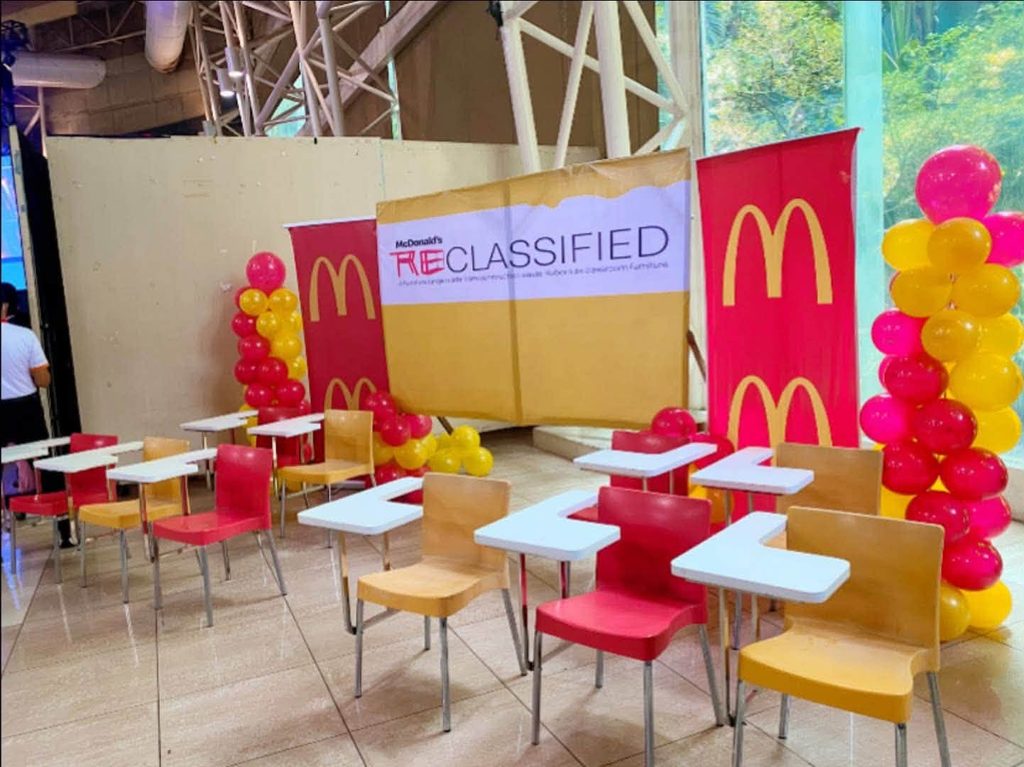
The program recently reached Cagayan de Oro for the first time, with McDonald’s turning over 50 repurposed classroom chairs to East City Central School in Barangay Lapasan.
Instead of discarding furniture and materials retired during restaurant renovations, ReClassified redirects tables, chairs, counters, booths, shelves and other materials for redesign into student armchairs, teacher desks, bookshelves and science laboratory tables.

Launched in 2023, the initiative is implemented in partnership with sustainability solutions company JunkNot and various education and community partners.
For McDonald’s Philippines, the program provides an opportunity to address two objectives simultaneously: reducing waste from its operations while responding to practical needs in public education.
“Our partnership with the Department of Education has given us a deeper appreciation of the needs of our schools, teachers, and students. ReClassified is one way we can respond to a practical need while making sure that what has served us in our restaurants can continue to serve teachers and students in the classroom,” said Margot Torres, Managing Director of McDonald’s Philippines.
Turning sustainability into measurable impact
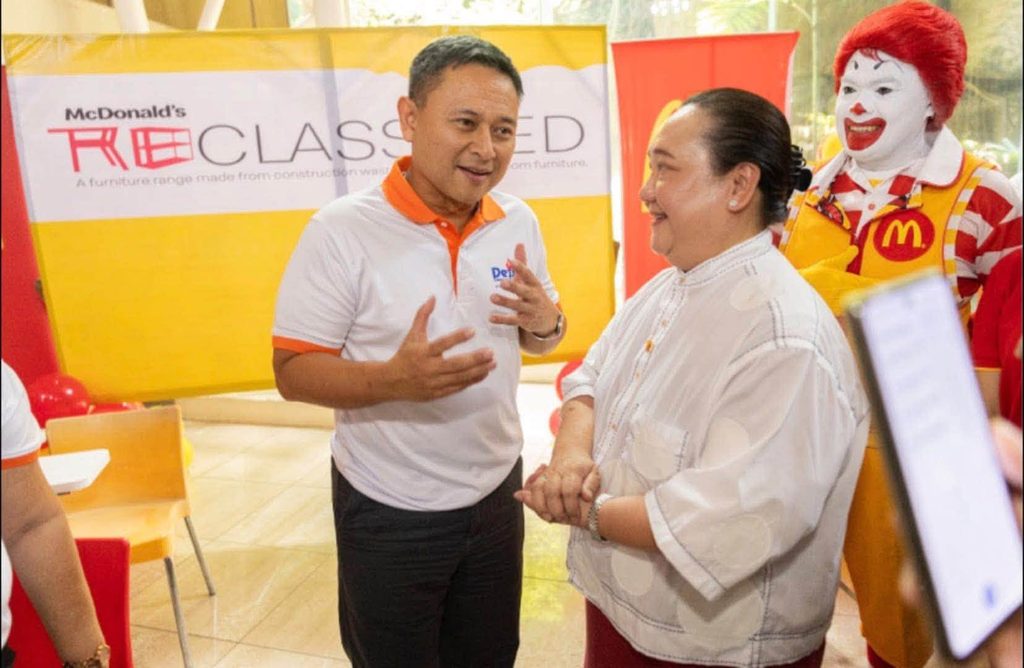
ReClassified has so far repurposed close to 1,000 pieces of classroom furniture, benefiting more than 5,500 students nationwide and reaching 20 public schools across nine areas in the country.
McDonald’s has also committed with the Department of Education (DepEd) to provide 1,500 ReClassified chairs to public schools by 2027.
Education Secretary Sonny Angara said the value of the initiative goes beyond addressing the need for classroom furniture, as it also introduces students to the practical application of recycling and sustainability.
“Aside from the chairs in classrooms, which we all know are truly helpful to our students, the principle behind ReClassified is recycling, which makes it sustainable,” Angara said.
“It teaches children that things often thrown away can be transformed into something useful. Instead of throwing waste away, we recycle and repurpose it,” he added.
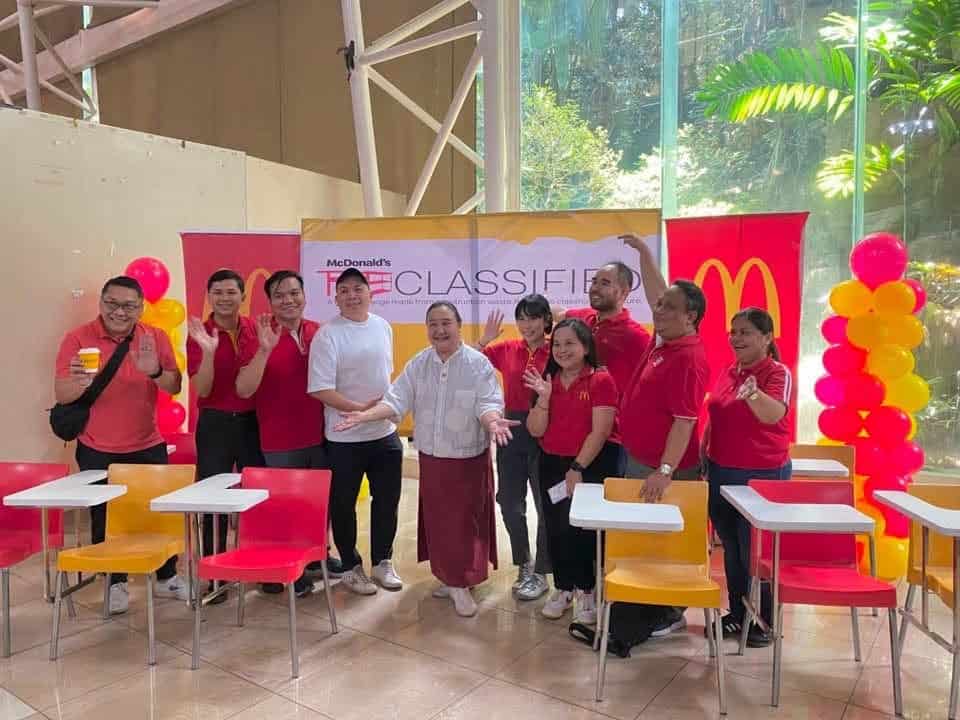
The Cagayan de Oro turnover coincided with the national kick-off of the National Teachers’ Month celebration in Mindanao, where Angara led activities recognizing the contribution of Filipino teachers to the education system.
The ReClassified initiative has received recognition from the Asia Pacific Tambuli Awards and Marketing Excellence Awards Philippines, earning Grand Prix, Gold and Silver awards at the Tambuli Awards and a Gold for Excellence in CSR/Cause Marketing at the Marketing Excellence Awards.
Business growth alongside community investment
McDonald’s sustainability initiative forms part of its broader involvement in Philippine education and community development.
The company previously introduced McClassroom to provide alternative learning spaces during the pandemic and continues to participate in Brigada Eskwela and National Teachers’ Month.
Through Ronald McDonald House Charities Philippines (RMHC), McDonald’s also supports early childhood education through Ronald McDonald Bahay Bulilit and foundational literacy through its Read-To-Learn program.
Its community presence is particularly visible in Cagayan de Oro, where two Ronald McDonald Bahay Bulilit learning centers have been established—one in Barangay Nazareth and another in Macanhan, Barangay Carmen.
Its Read-To-Learn program also has partnerships with 54 schools across the city.
“Being part of our communities is not just about opening more restaurants. It means contributing to the things that matter to the people we serve,” Torres said.
“Education has been part of McDonald’s work in the Philippines for decades, and our approach has continued to evolve with the needs of the communities we serve,” she added.
ReClassified illustrates an increasingly relevant approach to corporate sustainability: finding additional value in materials that would otherwise leave the business cycle while directing them toward long-term social use.
For McDonald’s, a piece of furniture reaching the end of its life inside a restaurant does not necessarily mean the end of its usefulness. Through redesign and repurposing, it can begin another cycle—this time serving students and teachers inside Philippine classrooms.